
OpenAI Codex CLI
OpenAI Codex CLI installation guide — install a terminal-based AI coding assistant on Windows, macOS, and Linux, connected to New API. Supports sandbox policies and atomic patch editing.
Project Overview
Codex CLI is a coding agent from OpenAI that runs locally on your computer.
- Official website: https://chatgpt.com/codex
- Project homepage: https://github.com/openai/codex
Demo
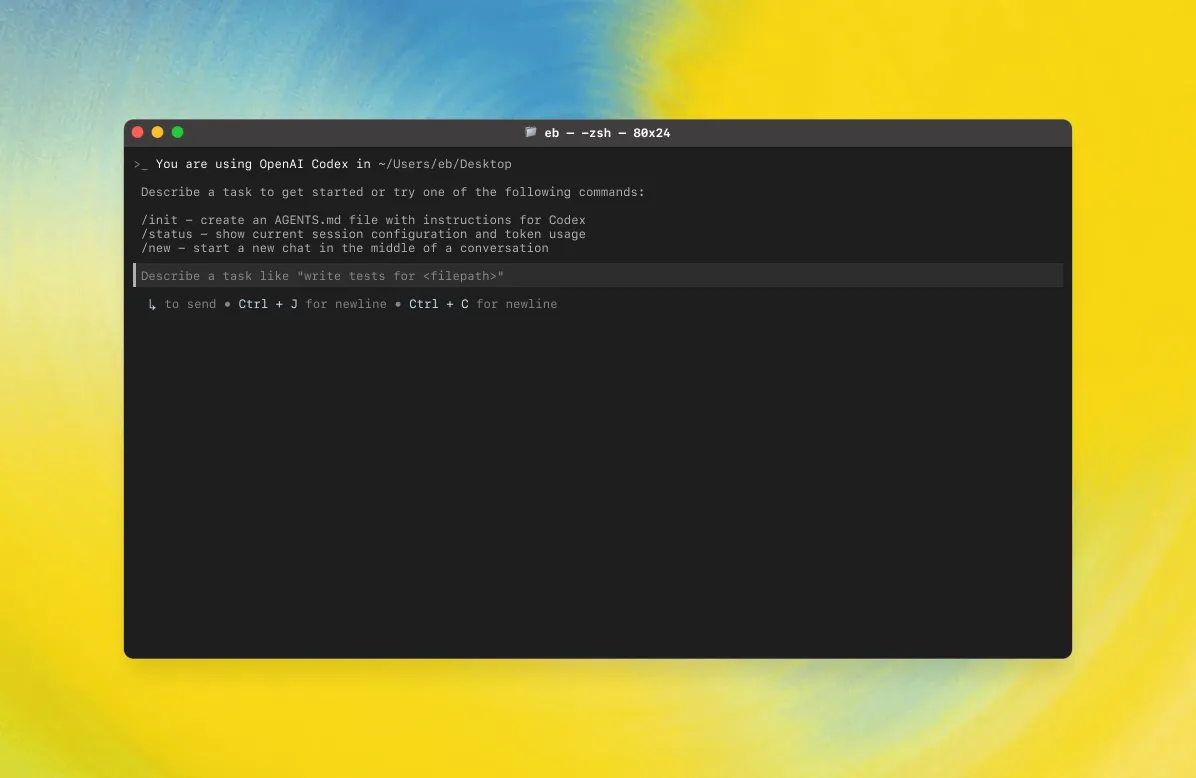
Features
| Feature Category | Description |
|---|---|
| Terminal-based coding assistant | Codex CLI is a terminal-based interactive coding assistant for editing code, generating patches, and running commands from the command line. |
| Tool-driven architecture | Provides tools such as apply_patch, shell, update_plan, and multi_tool_use for controlled changes to repository files and operations. |
| Atomic patch editing | Uses a dedicated patch format to atomically add/update/delete files through apply_patch, making auditing and rollback easier. |
| Sandbox and approvals | Supports sandbox policies (such as workspace-write and read-only) and approval modes (on-request, on-failure, never) to control write and network access permissions. |
| Plan tracking | update_plan is used to list steps and track status, requiring exactly one in_progress step at all times to maintain clear progress. |
| Interaction conventions | Sends a brief preamble before important actions, keeping the tone friendly, concise, and providing progress updates. |
| Security constraints | Follows strict rules (does not arbitrarily modify unrelated files, does not add copyright headers, does not run destructive commands), and requires user approval for sensitive operations. |
| Testing and formatting | Recommends running relevant tests and formatting tools after changes, but is not responsible for fixing issues unrelated to the current task. |
| Output and style | Final output follows CLI rendering conventions (for example, ** headings and backticks for paths/commands), keeping the structure concise and scannable. |
| Parallel execution | Supports running multiple tools in parallel through multi_tool_use.parallel to improve efficiency. |
AI Model Configuration
Illustrated Guide for Windows
1. Open the terminal
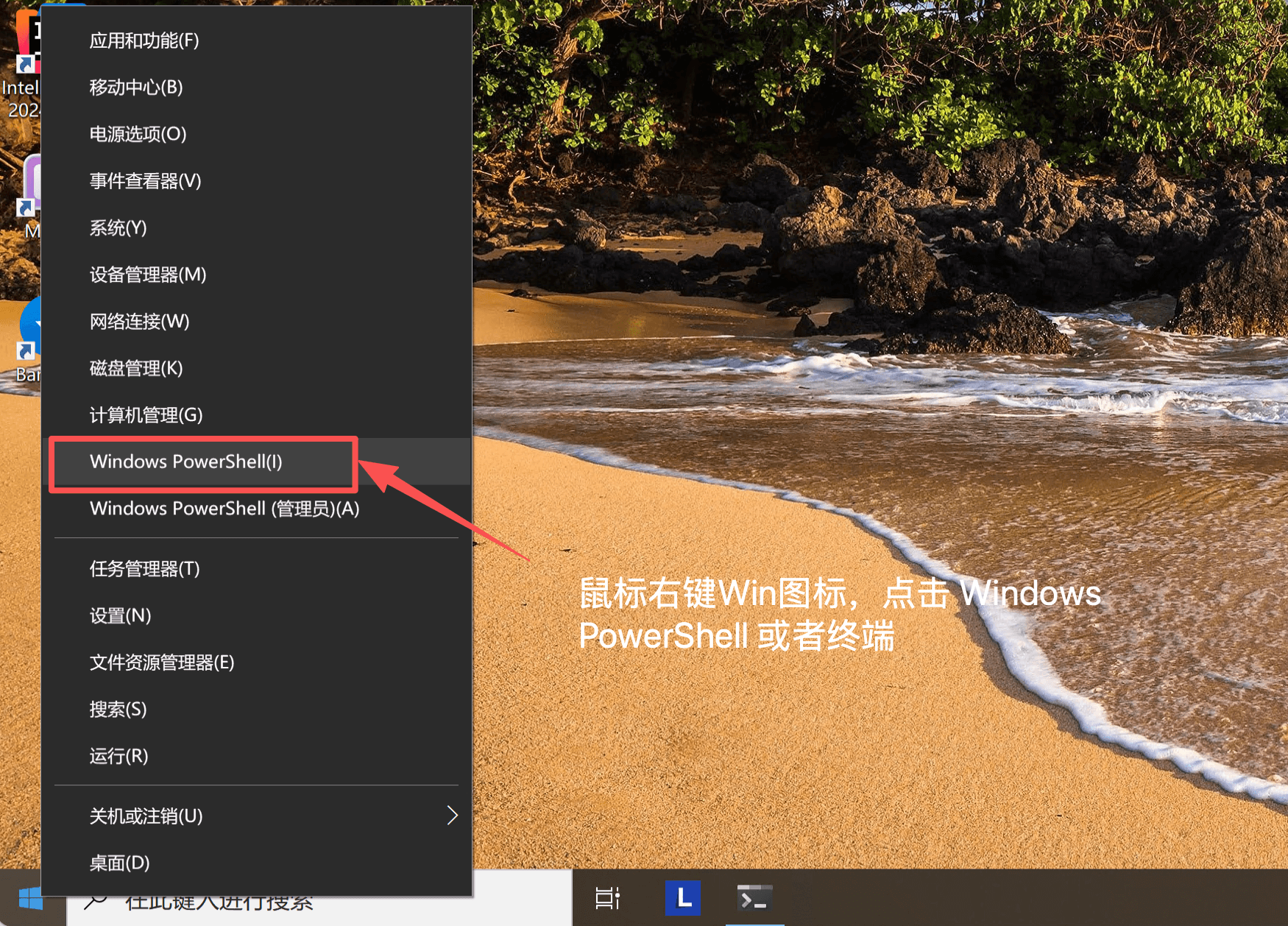
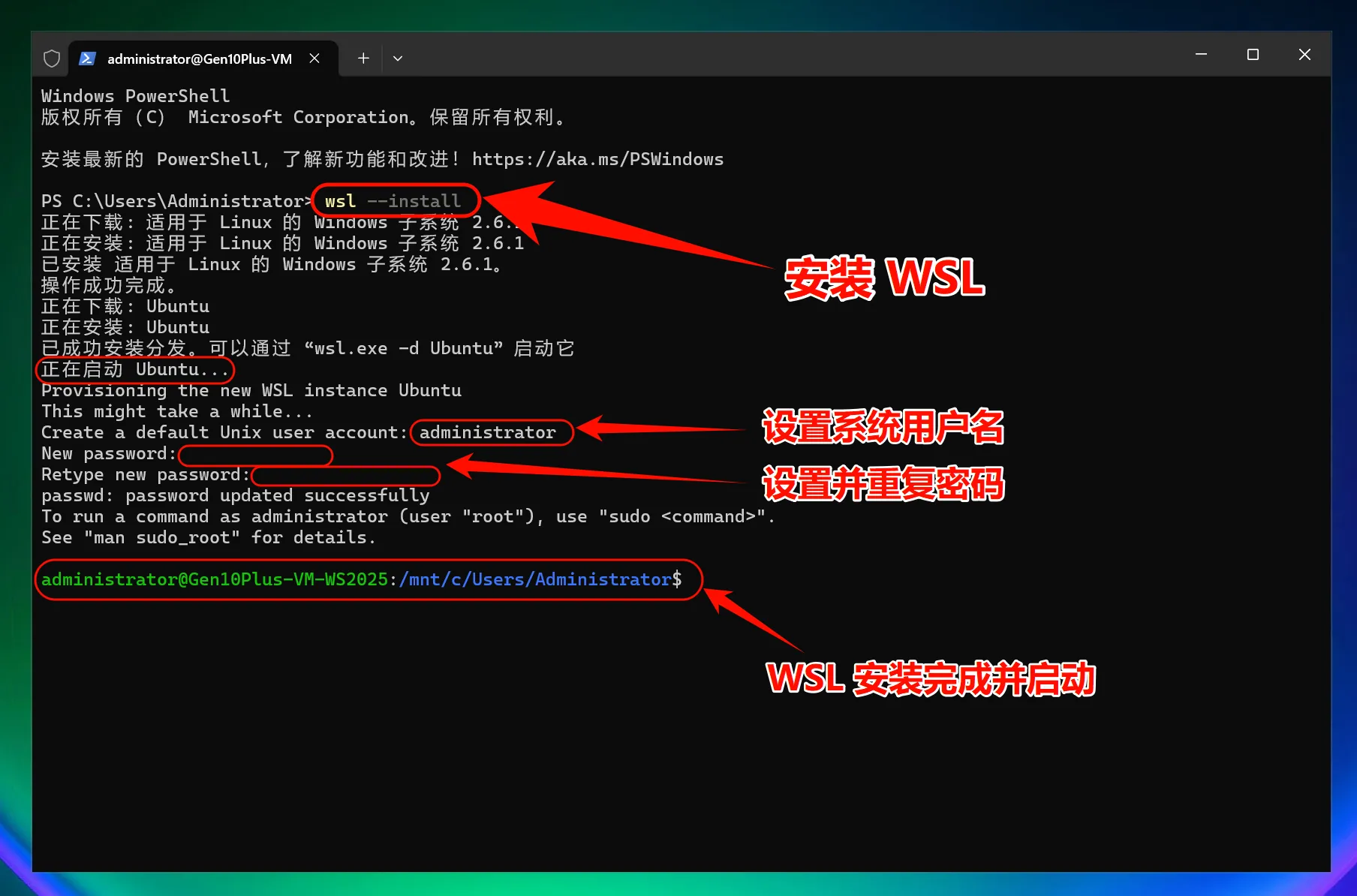
2. Install WSL
For the best performance on Windows, install and use Windows Subsystem for Linux (WSL2).
Install WSL2 and restart your Windows computer
wsl --installRestart your Windows computer after the installation is complete.
Windows notes
- PowerShell is recommended instead of CMD
- If you encounter permission issues, try running as Administrator
- Some antivirus software may flag it incorrectly; add it to the allowlist if needed
Download Node Version Manager (NVM)
curl -o- https://raw.githubusercontent.com/nvm-sh/nvm/master/install.sh | bash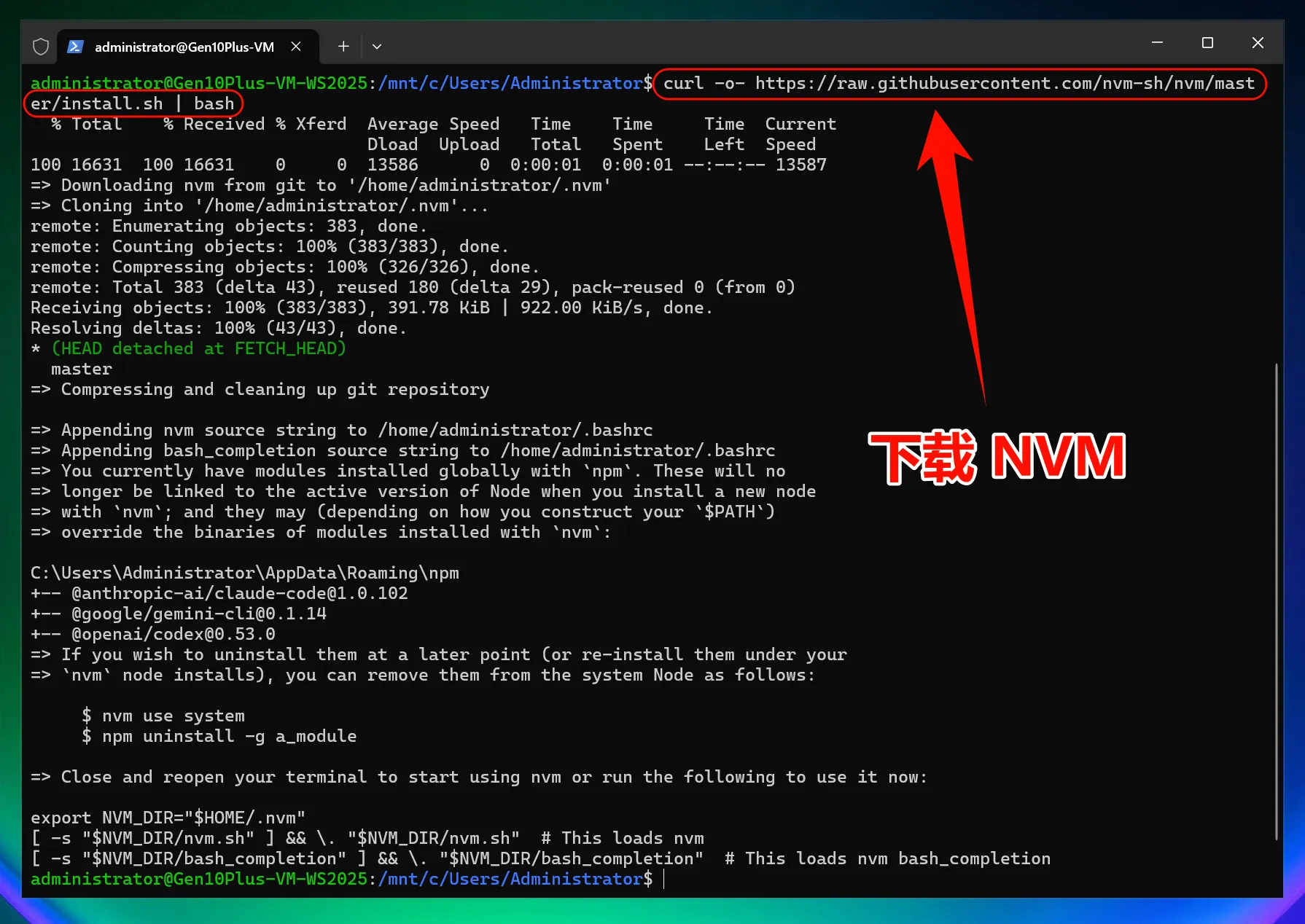
Install Node.js 22 with NVM
Open a new PowerShell tab and launch WSL:
wslInstall Node.js (version requirements may change over time, so install the version required by the OpenAI website):
nvm install 22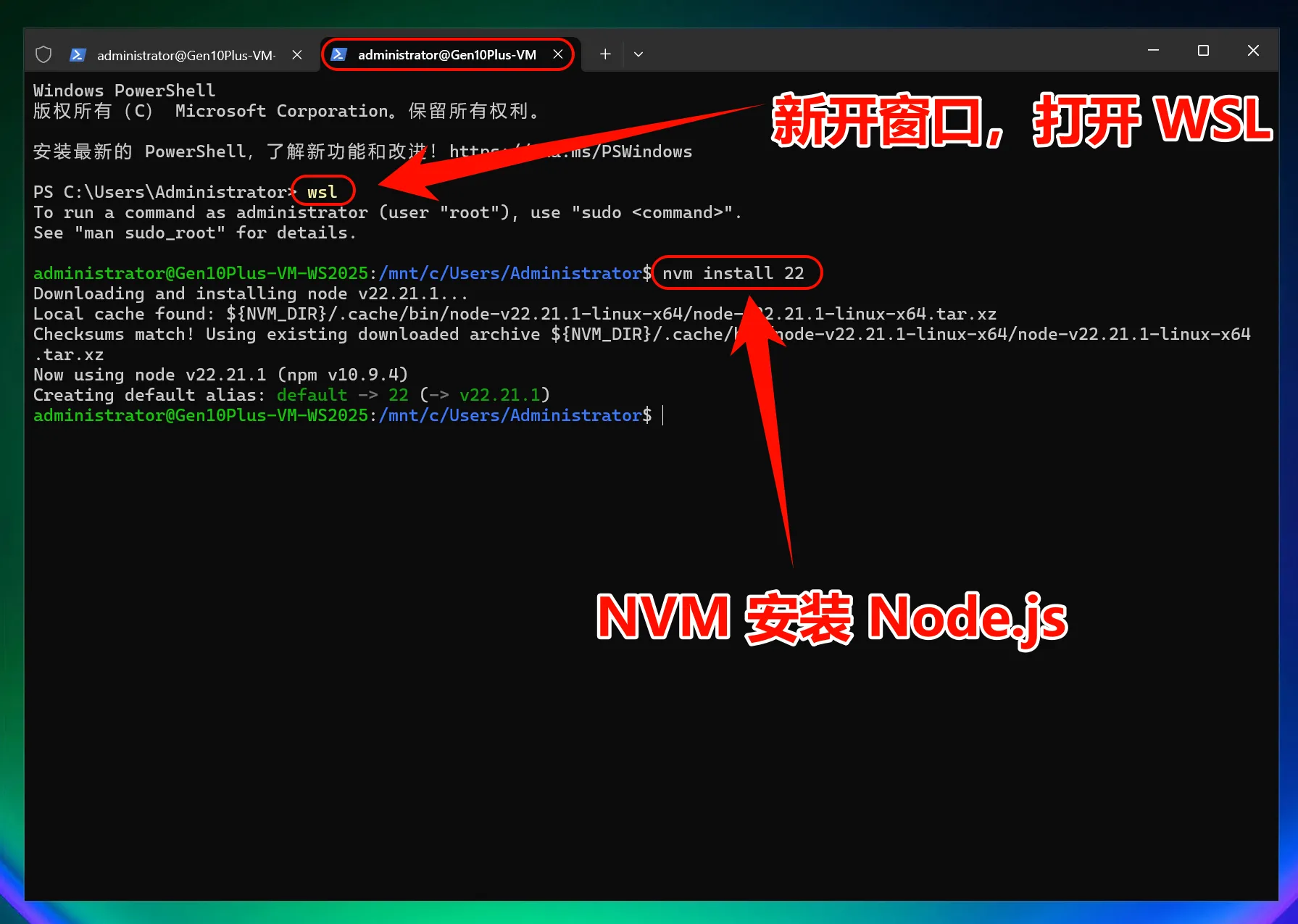
3. Install Codex CLI
Install Codex CLI
npm i -g @openai/codexThis command downloads and installs the latest version of Codex CLI from the official npm registry.
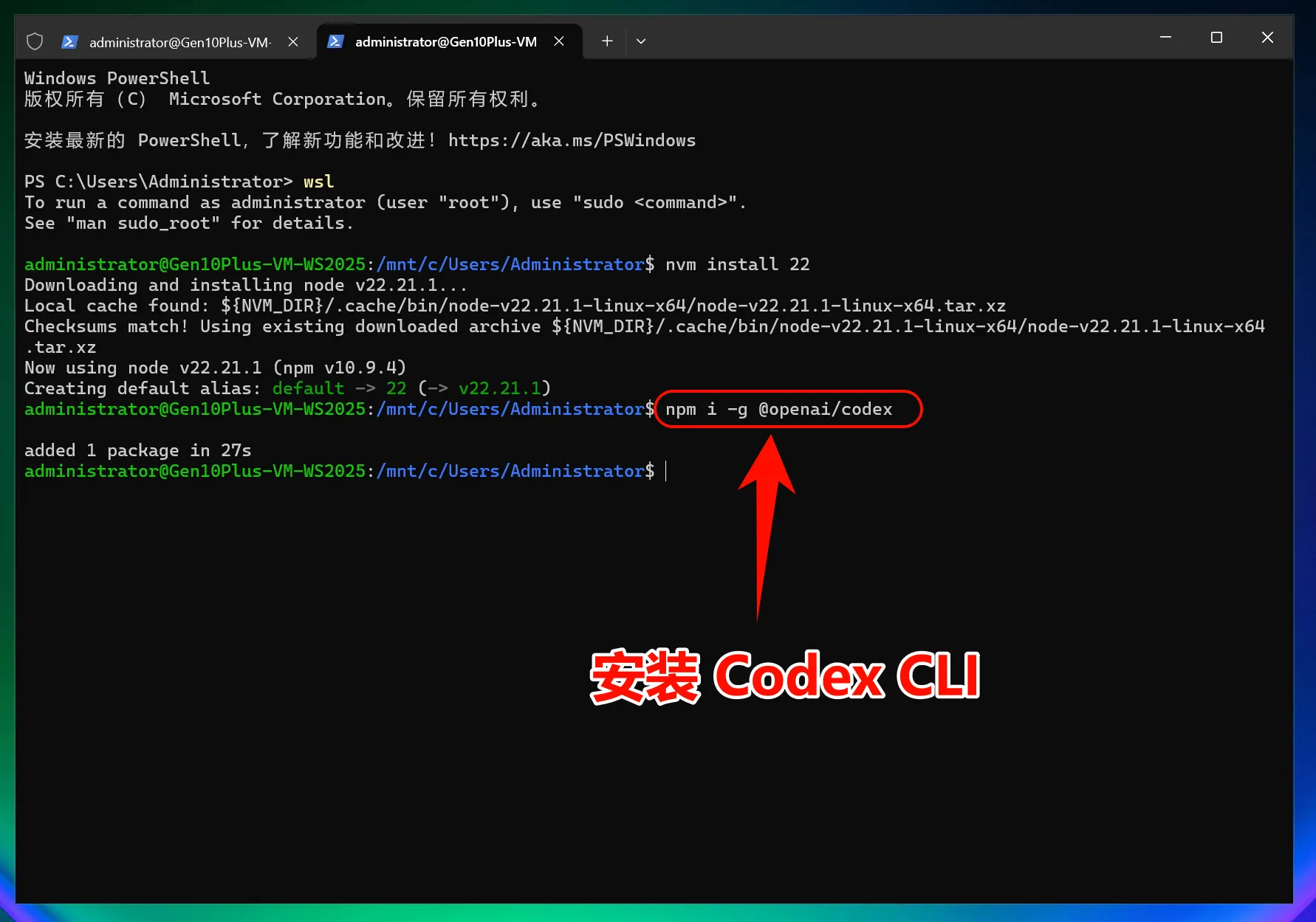
4. Update the configuration file
One-click update for the Codex CLI configuration file
iex (irm 'https://raw.githubusercontent.com/QuantumNous/new-api-docs/refs/heads/main/helper/codex-cli-setup.ps1')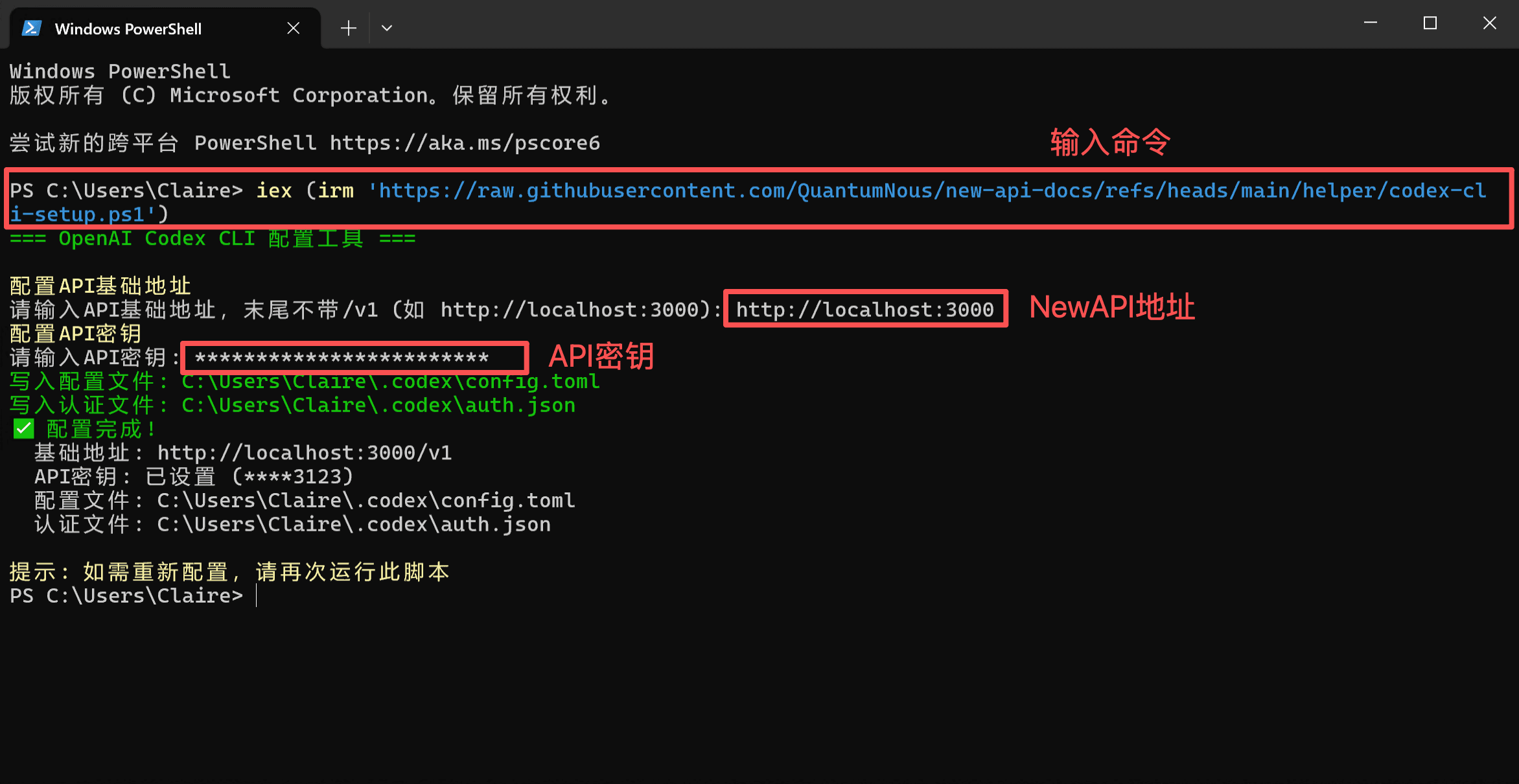
5. Start using Codex CLI
You can now start using Codex CLI.
Launch Codex CLI
Start WSL2:
wslLaunch Codex CLI directly:
codexUse it in a specific project:
cd mnt/c/path/to/your/project
codex
Press Enter to launch Codex CLI.
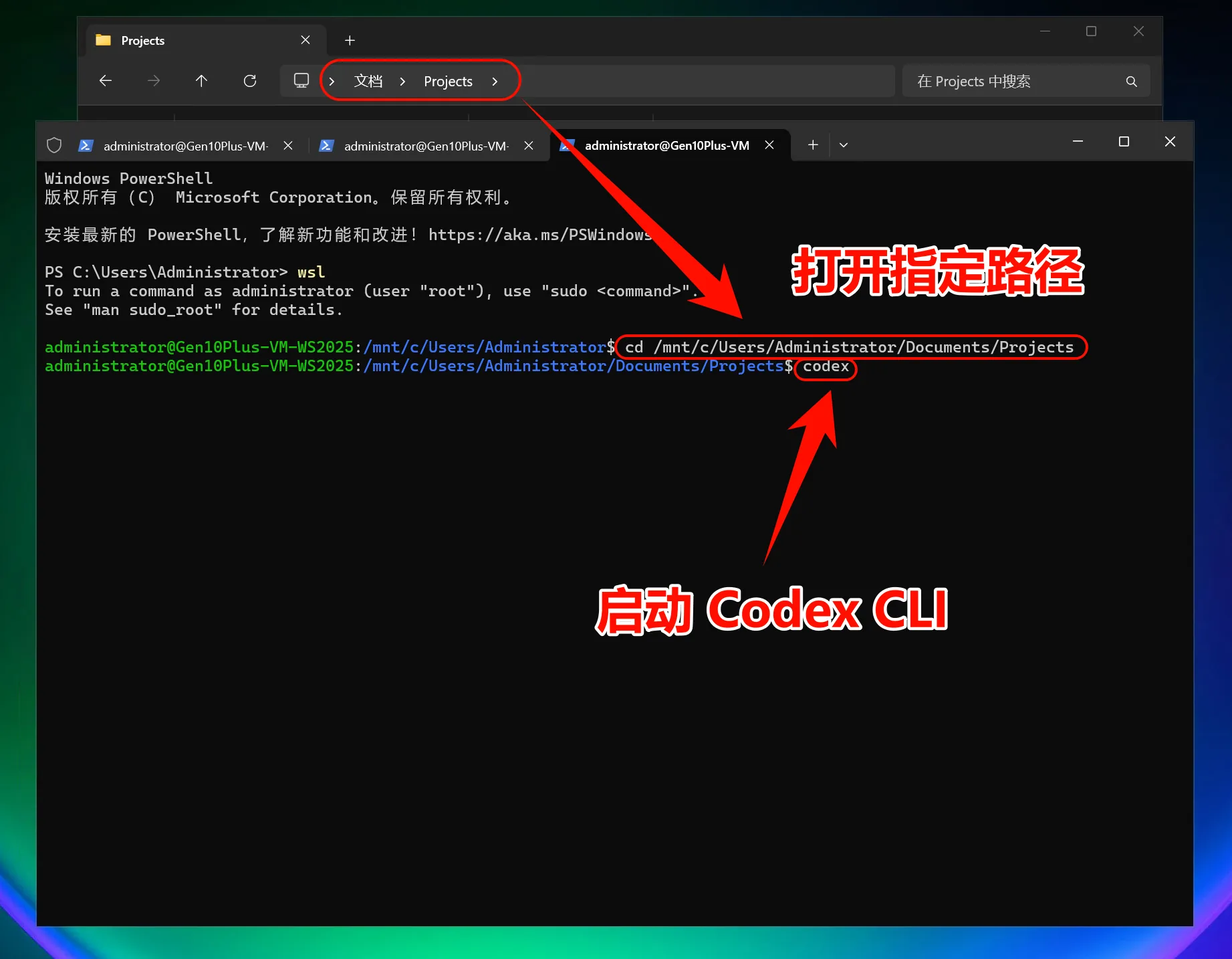
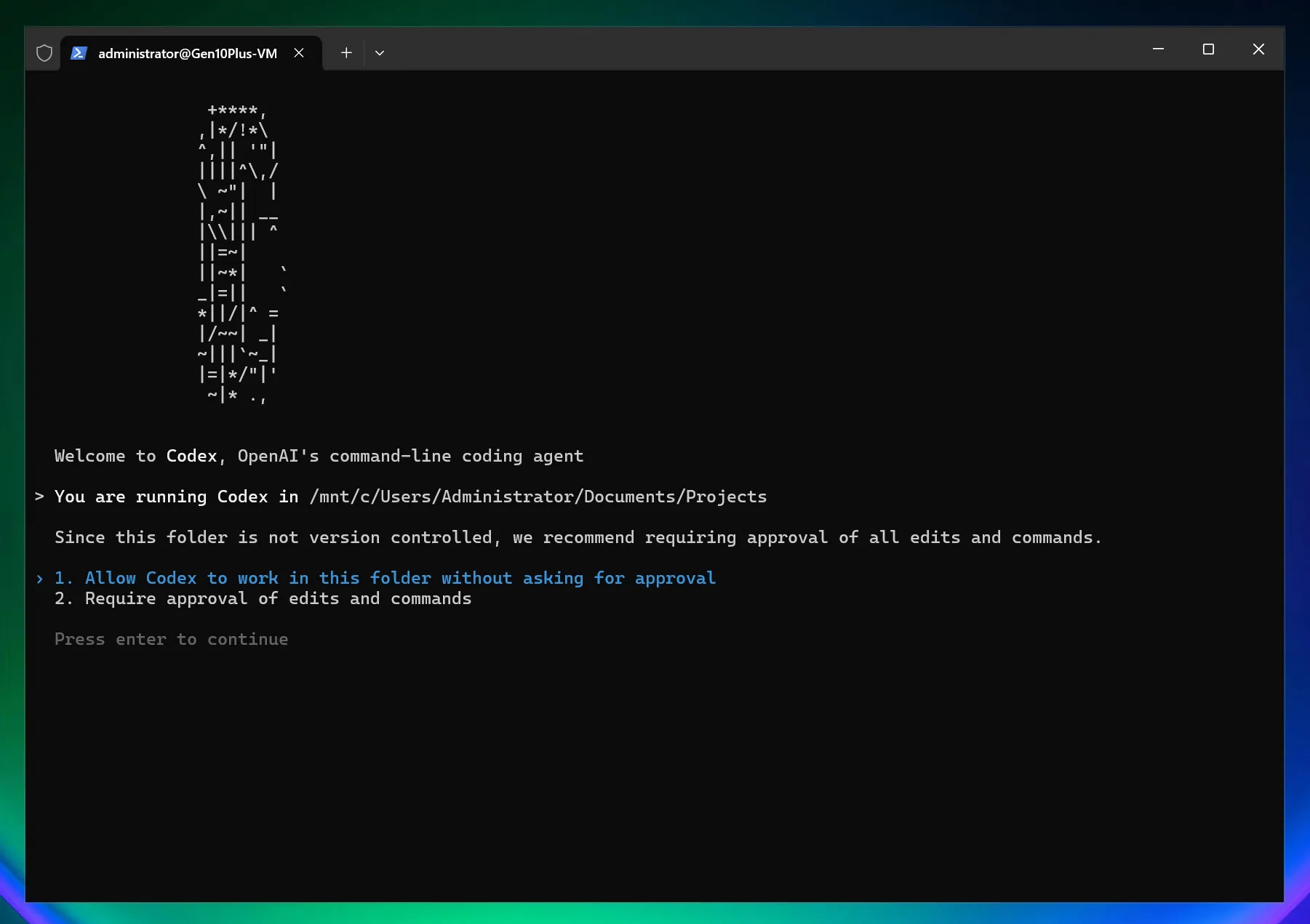
Set Codex CLI permissions: 1. Allow Codex to modify files directly; 2. Require manual approval before Codex modifies files
Select a model
/model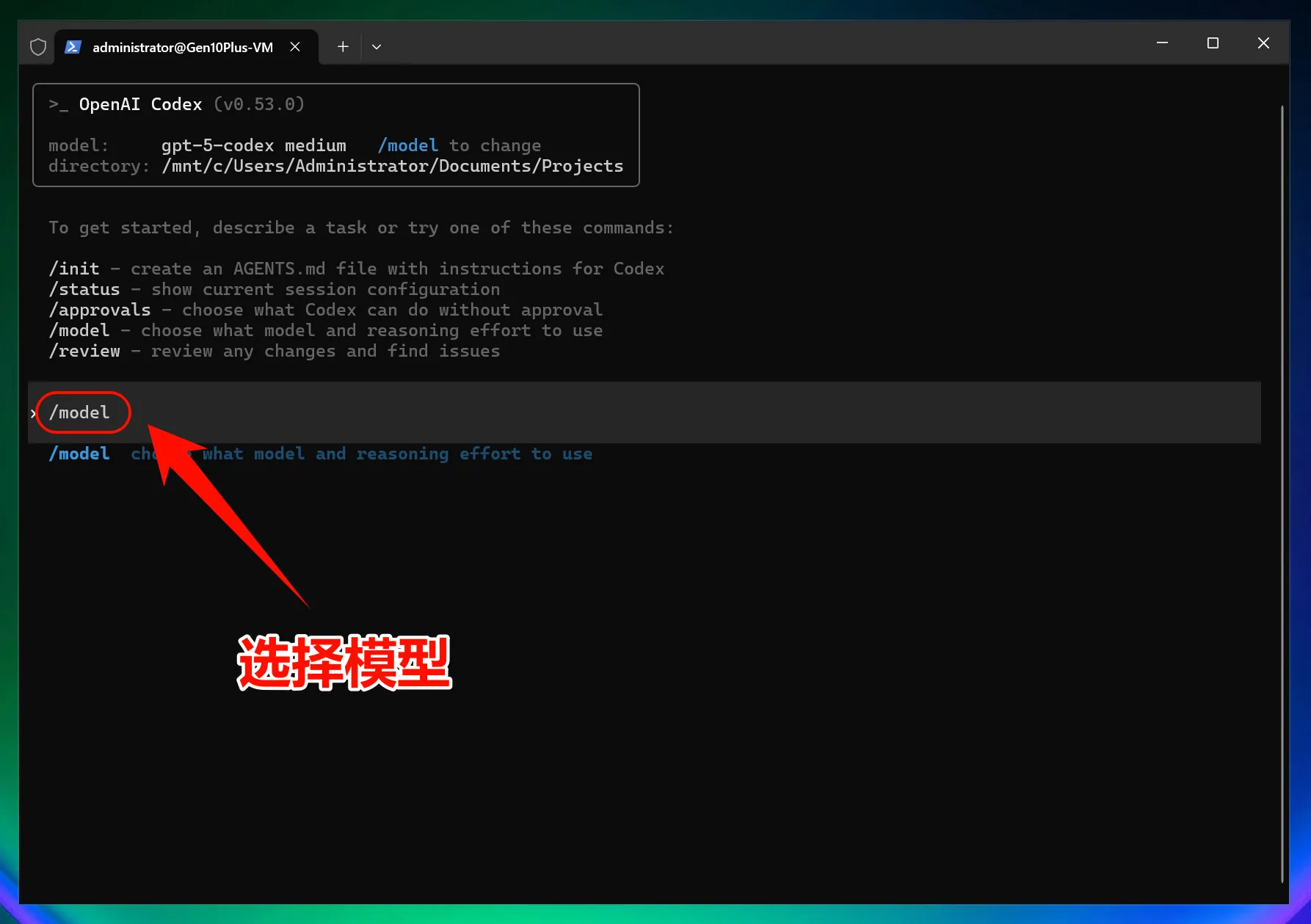
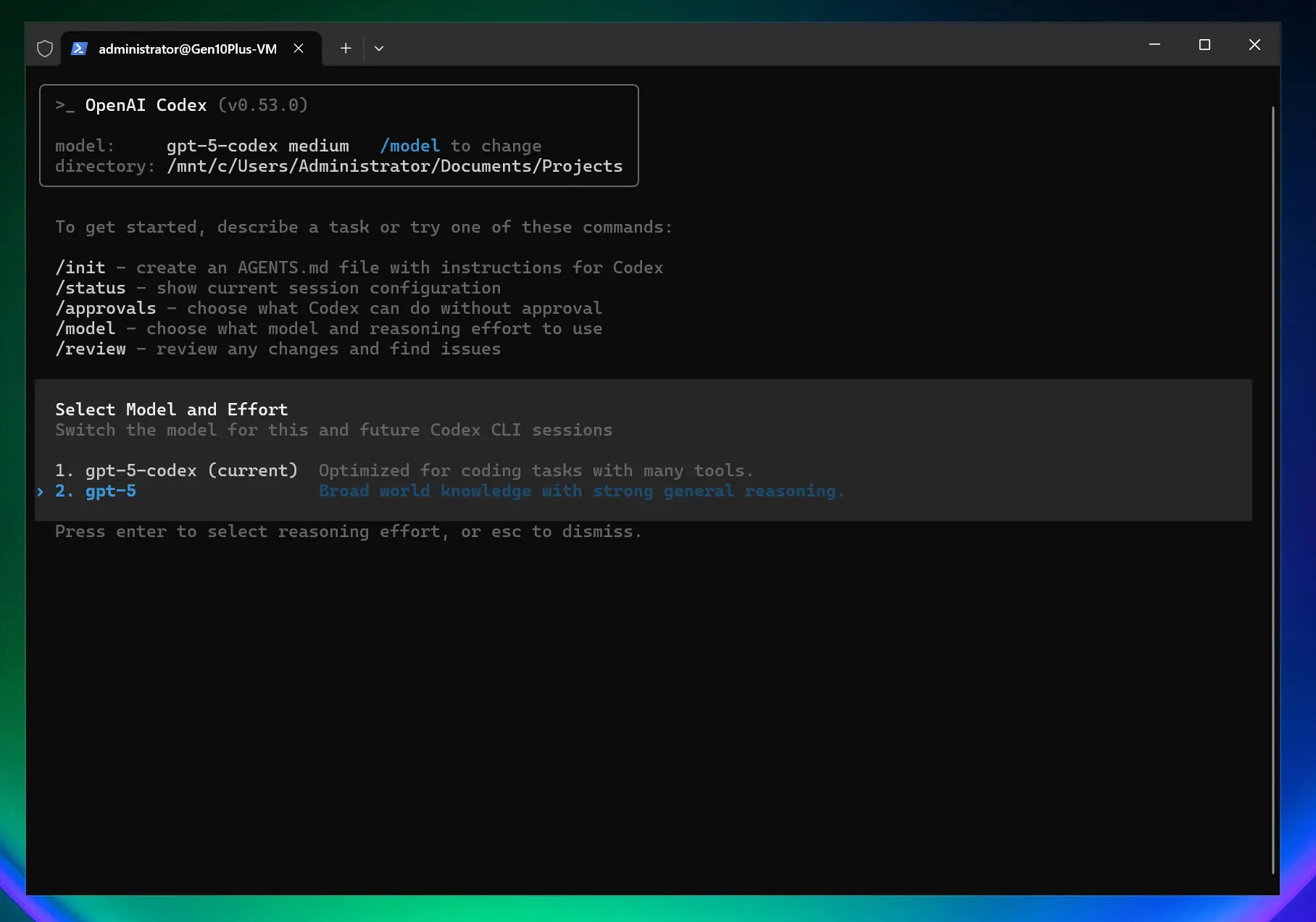
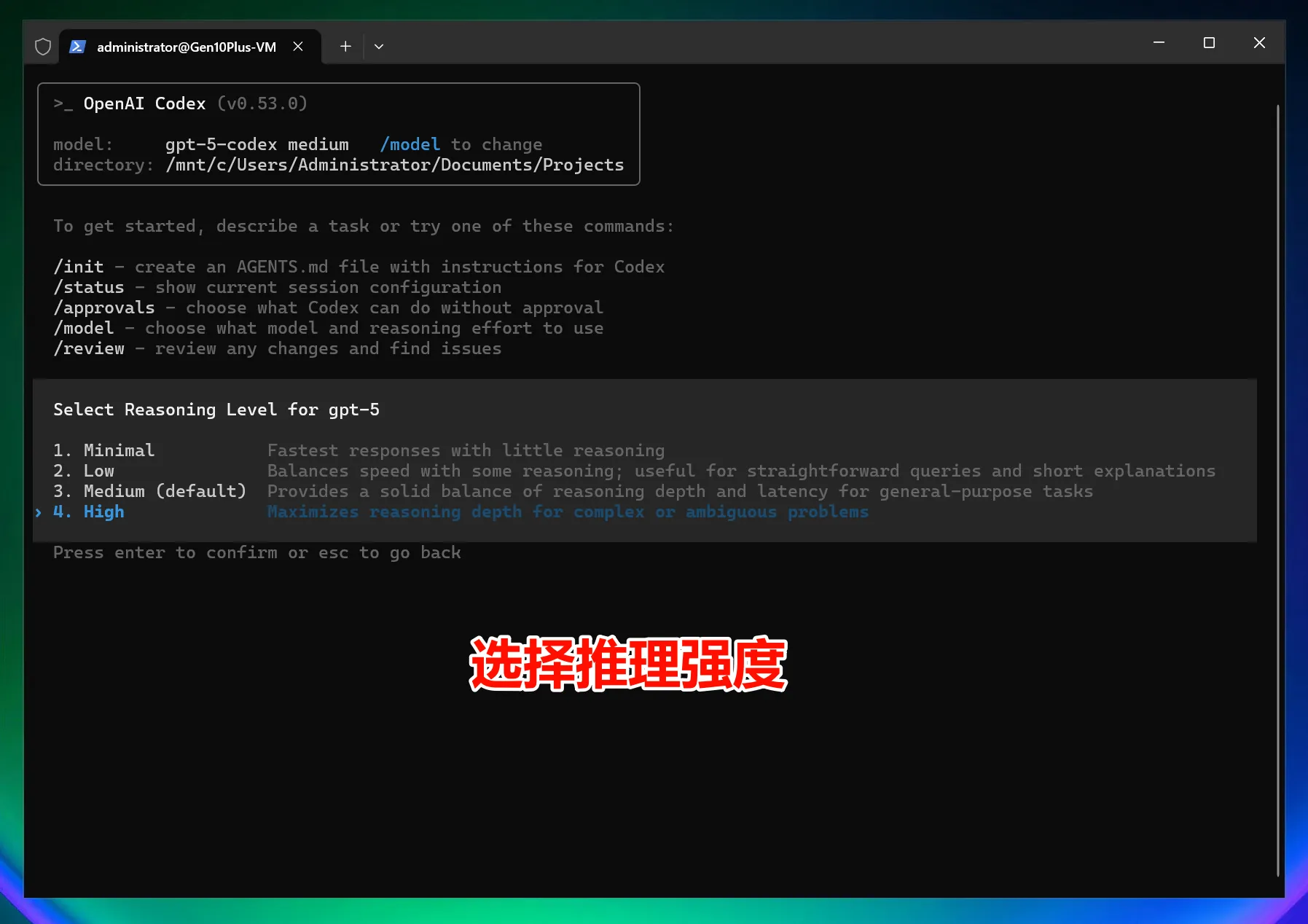
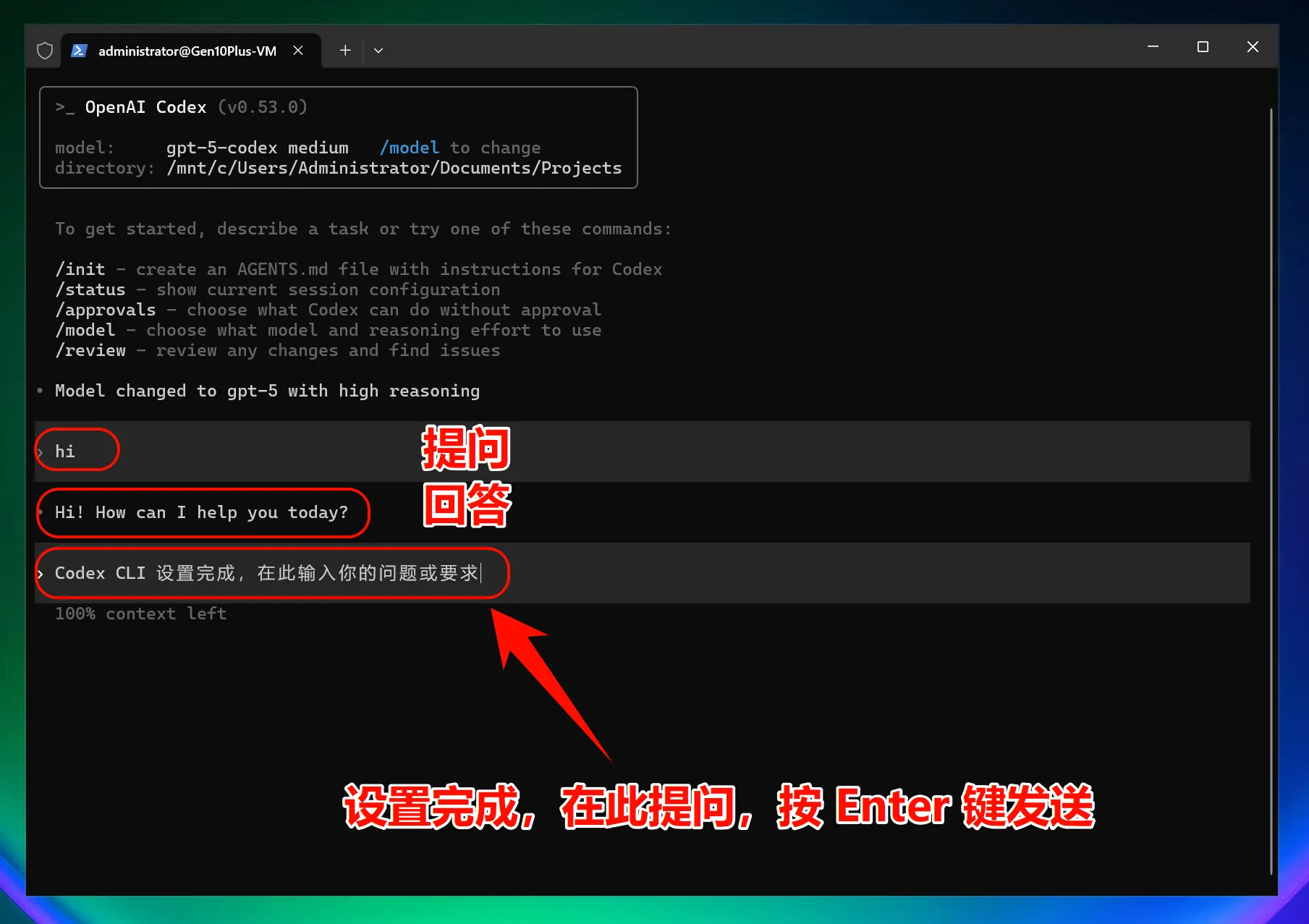
Note: After changing the endpoint address, all models used (including official preset models) will call the custom endpoint instead of using quota from your official account.
Illustrated Guide for macOS
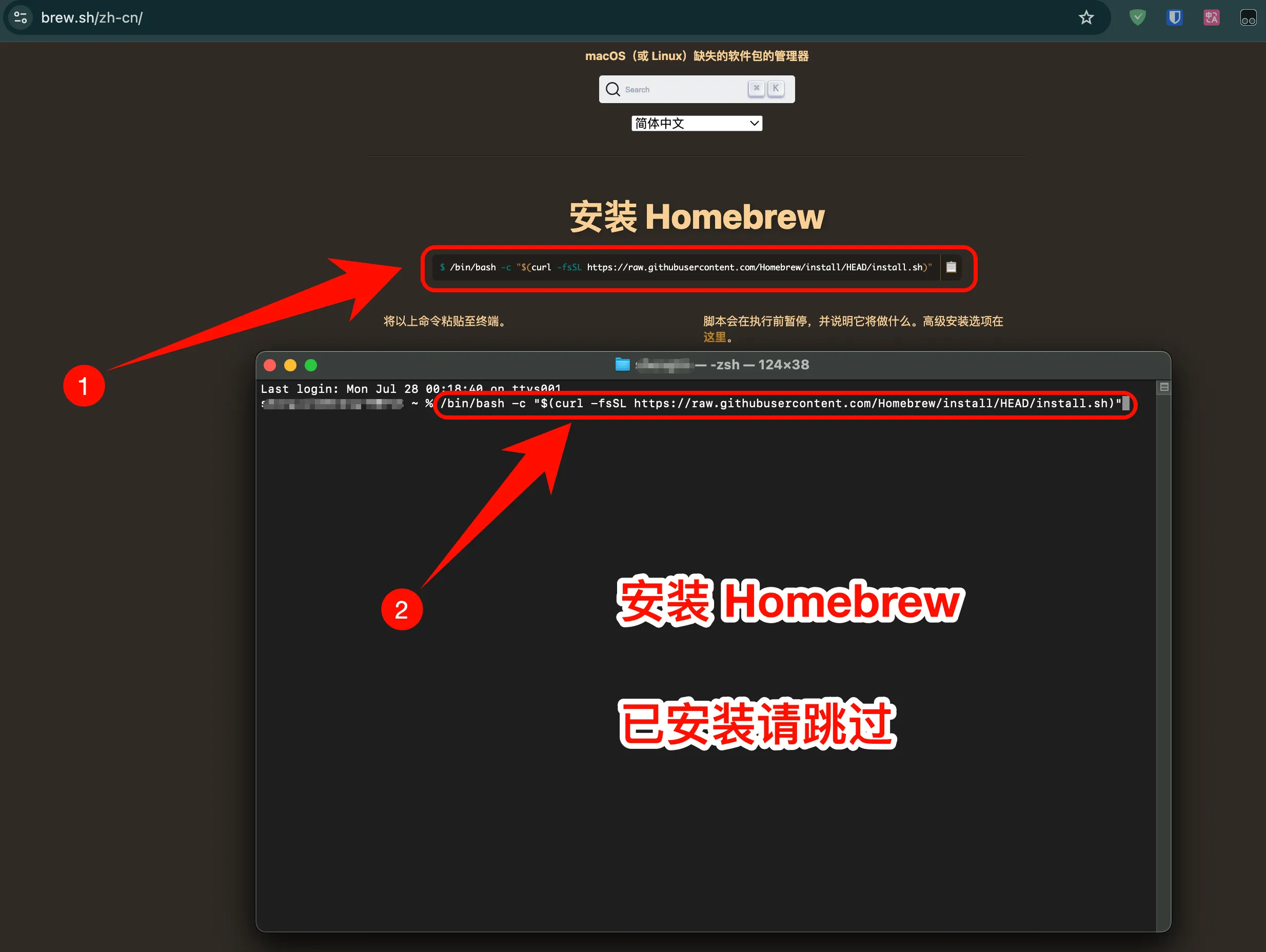
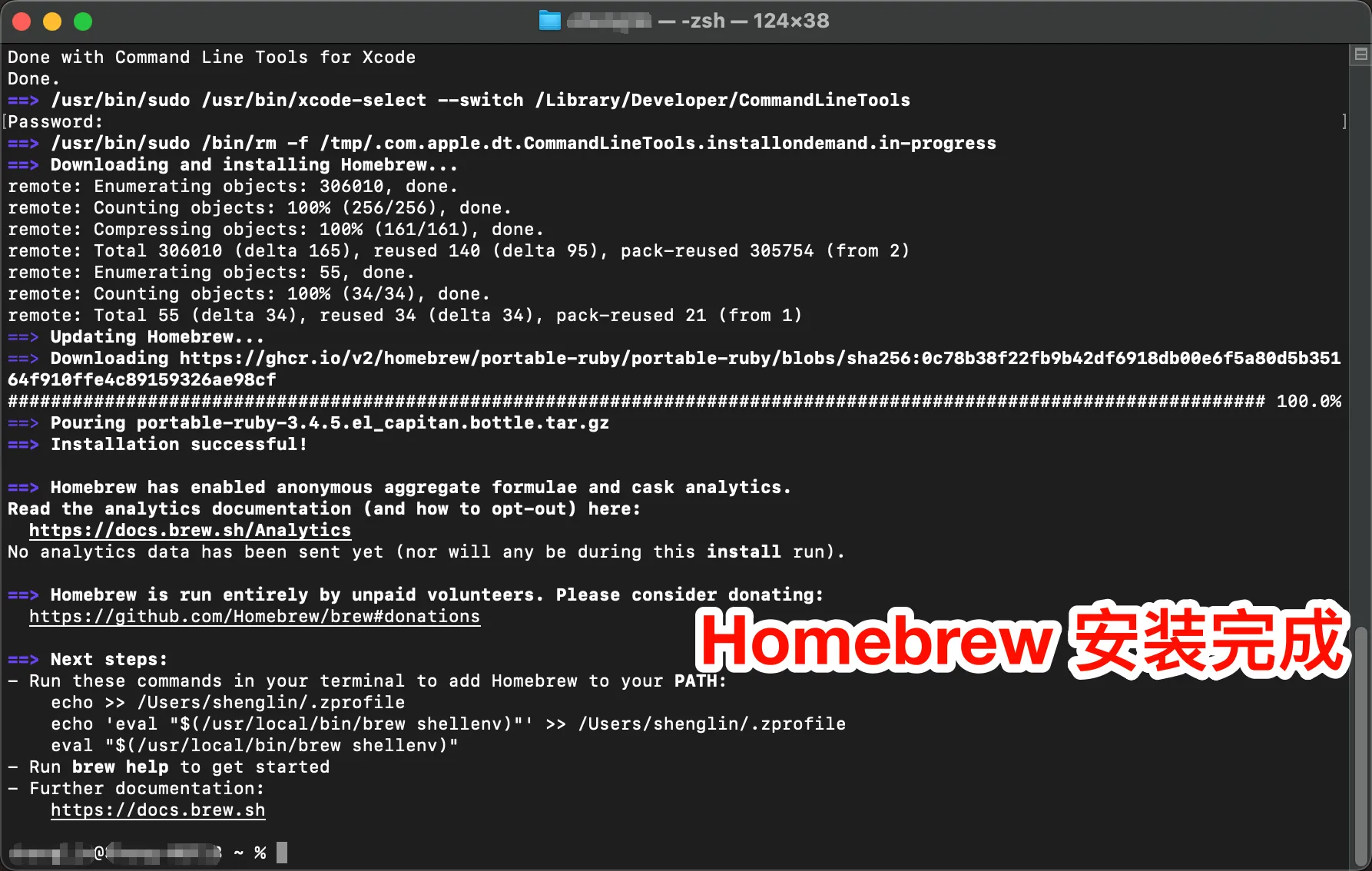
1. Install Homebrew (skip if already installed)
Homebrew is the package manager for software missing from macOS.
Official website: https://brew.sh
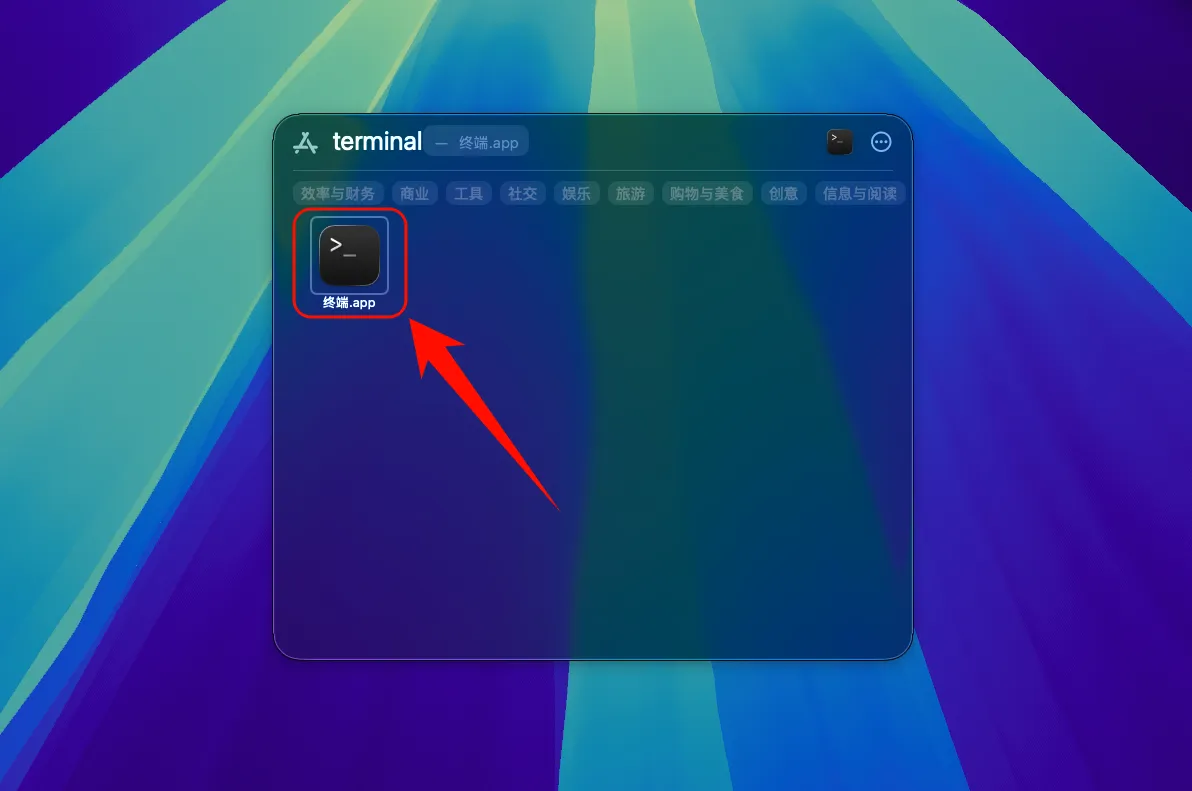
Install Homebrew
/bin/bash -c "$(curl -fsSL https://raw.githubusercontent.com/Homebrew/install/HEAD/install.sh)"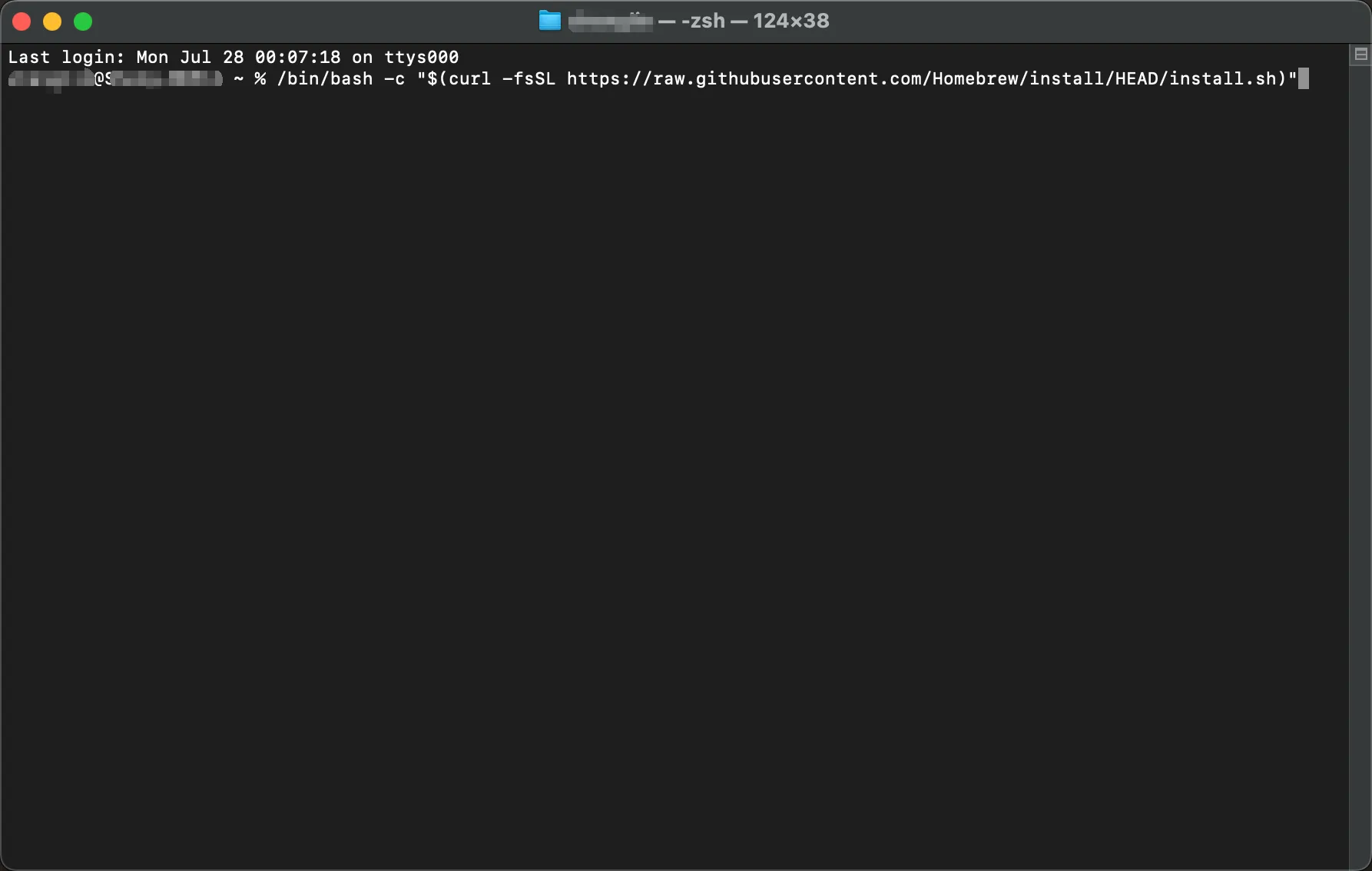
2. Install the Node.js environment
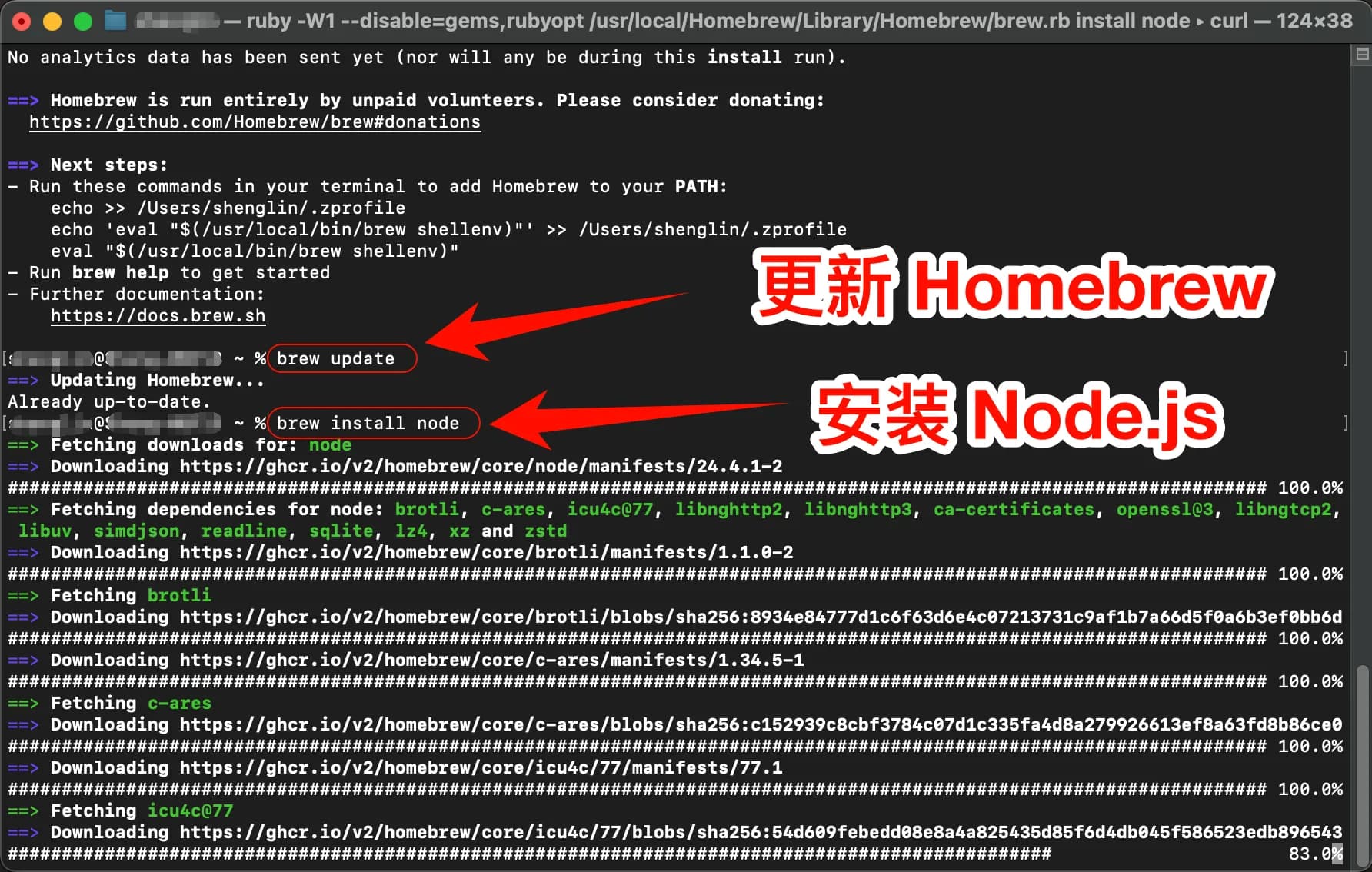
Node.js installation steps
Update Homebrew:
brew updateInstall Node.js:
brew install nodemacOS notes
- If you encounter permission issues, you may need to use
sudo - The first run may require approval in System Preferences
- Terminal or iTerm2 is recommended
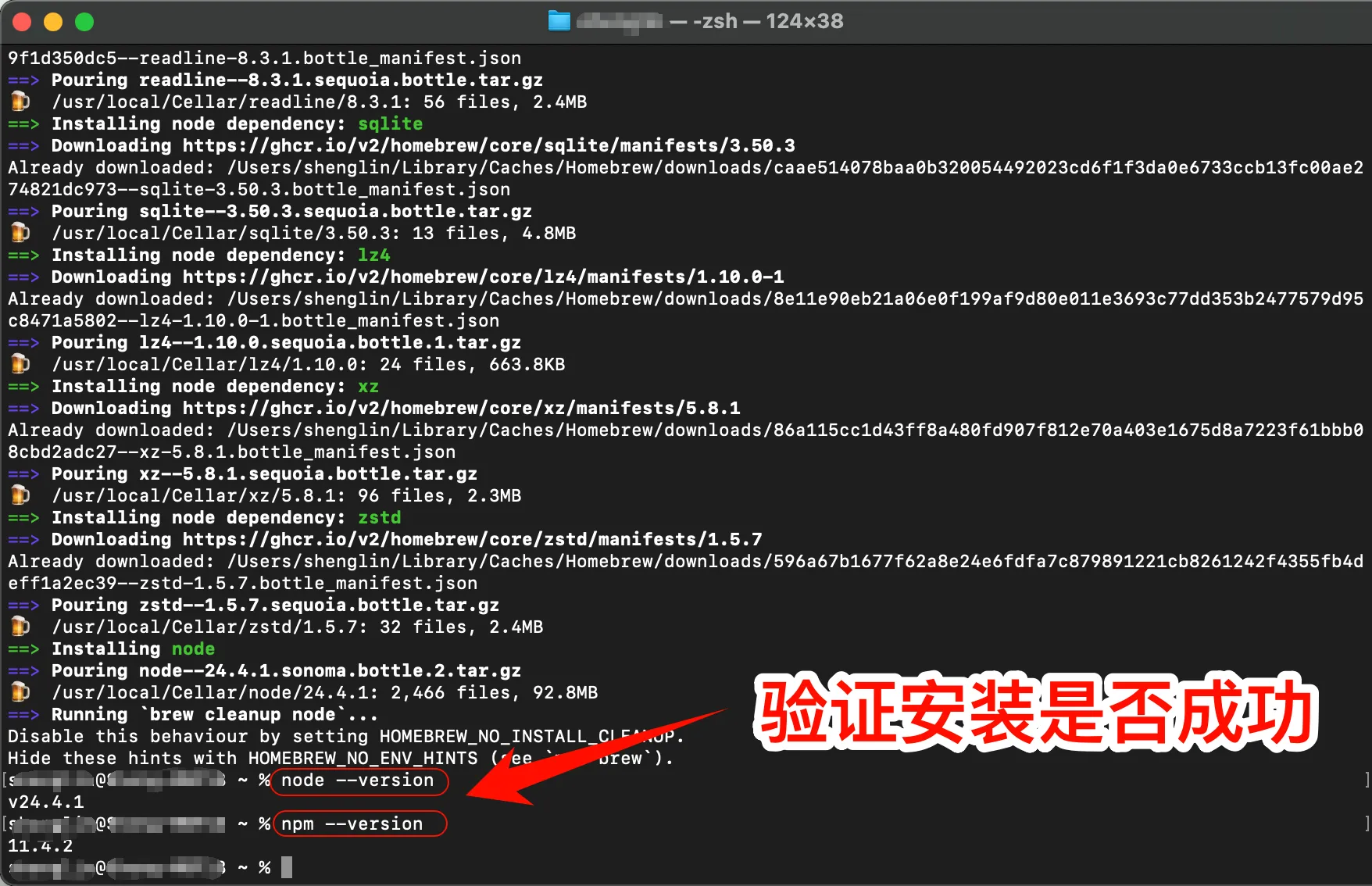
Verify that the installation succeeded
After installation, open Terminal and run the following commands:
node --version
npm --version
If version numbers are displayed, the installation was successful.
3. Install Codex CLI
Install Codex CLI
Open Terminal and run the following command:
# Install Codex CLI globally
npm install -g @openai/codex
If you encounter permission issues, you can use sudo:
sudo npm install -g @openai/codex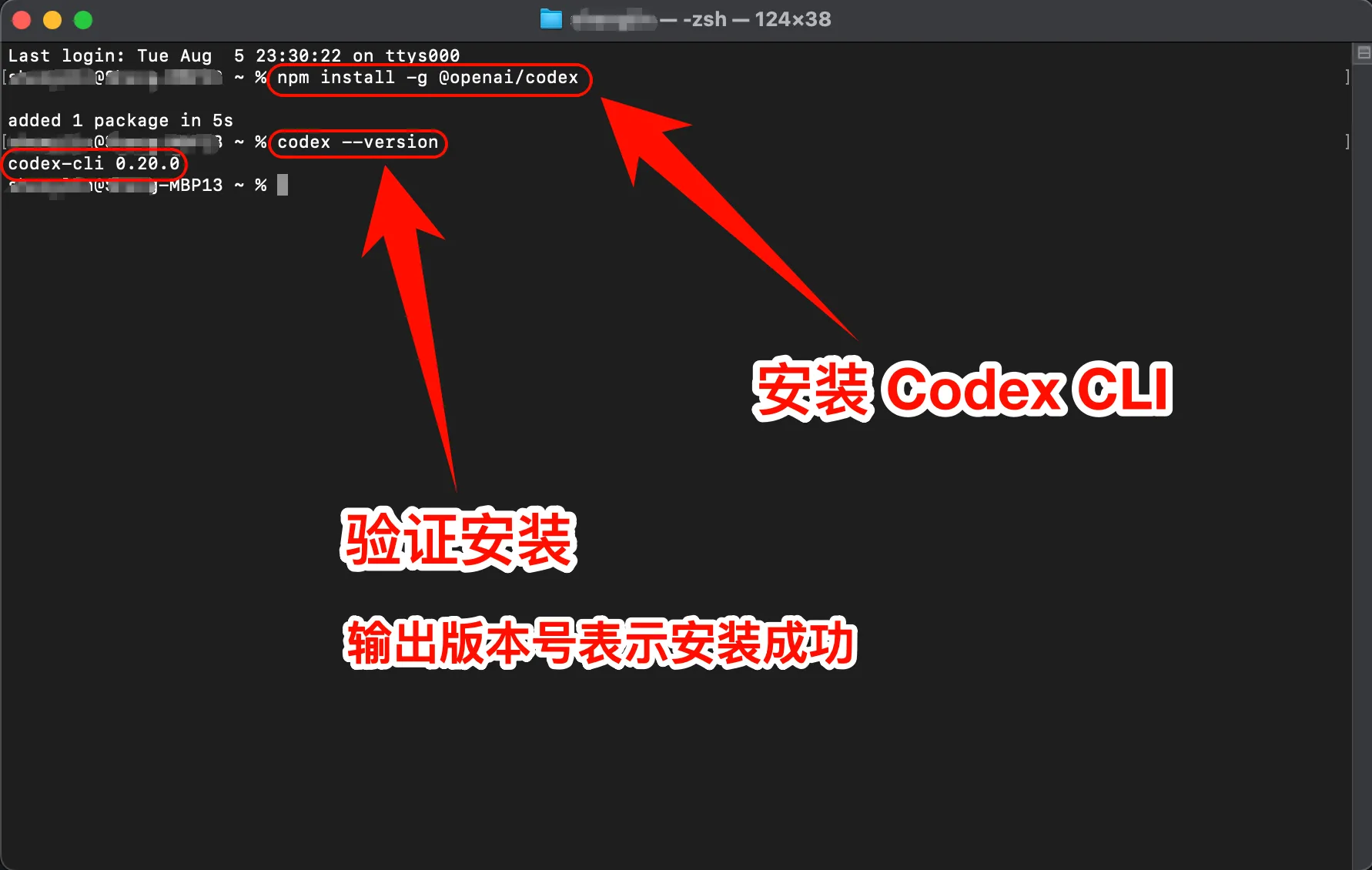
Verify the Codex CLI installation
After installation, run the following command to verify that it was installed successfully:
codex --versionIf a version number is displayed, congratulations! Codex CLI has been installed successfully.
4. Update the configuration file
One-click update for the Codex CLI configuration file
curl -fsSL https://raw.githubusercontent.com/QuantumNous/new-api-docs/refs/heads/main/helper/codex-cli-setup.sh | bash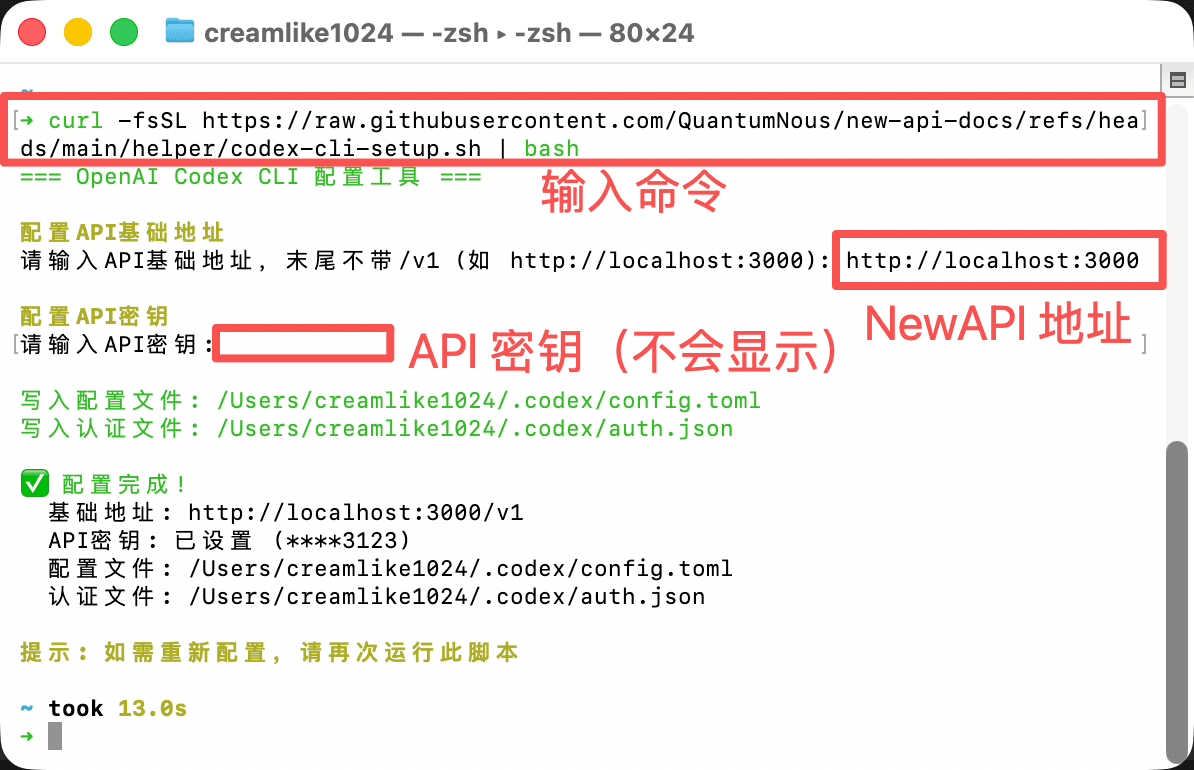
5. Start using Codex CLI
You can now start using Codex CLI.
Launch Codex CLI
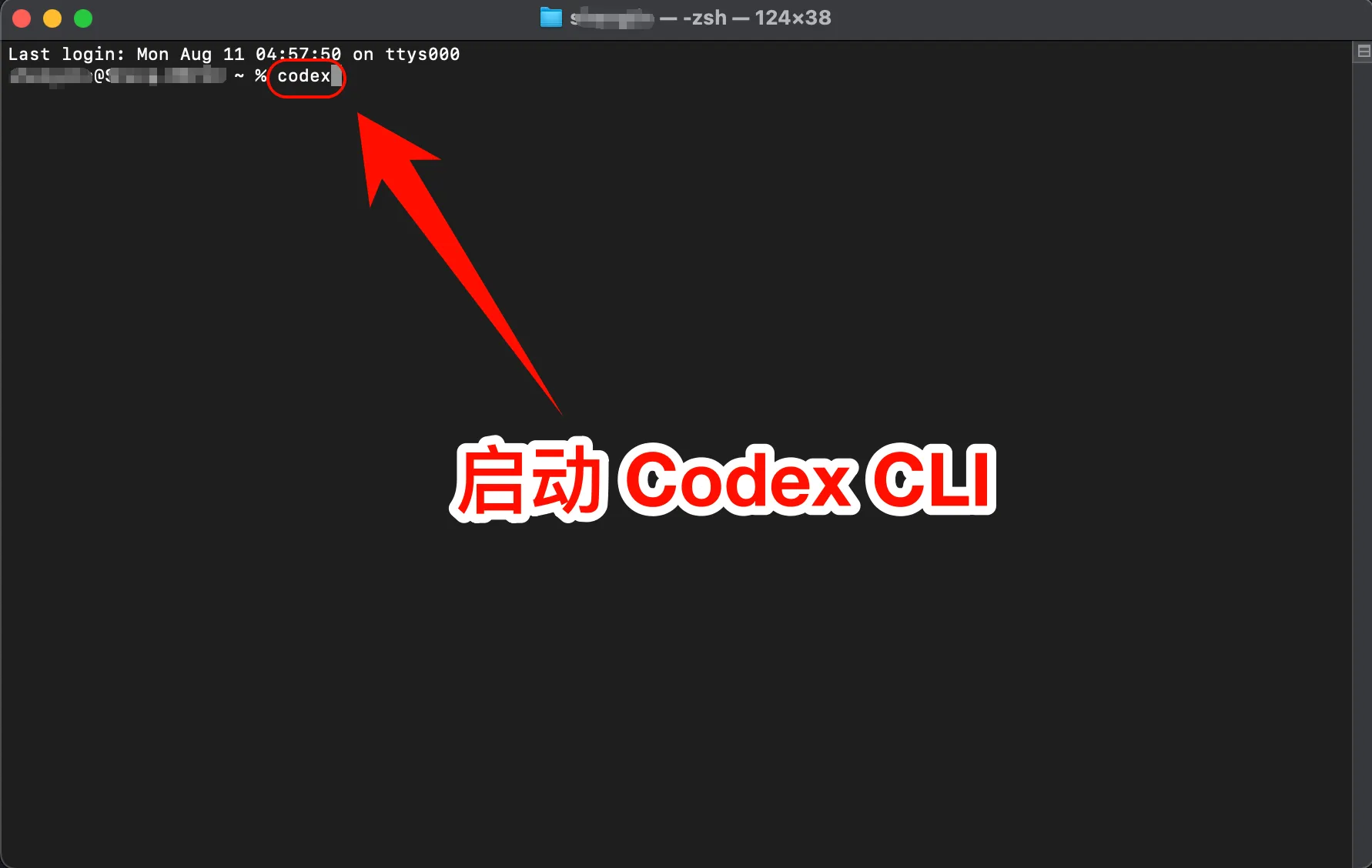
Launch Codex CLI directly:
codexUse it in a specific project:
cd /path/to/your/project
codex
Press Enter to launch Codex CLI.
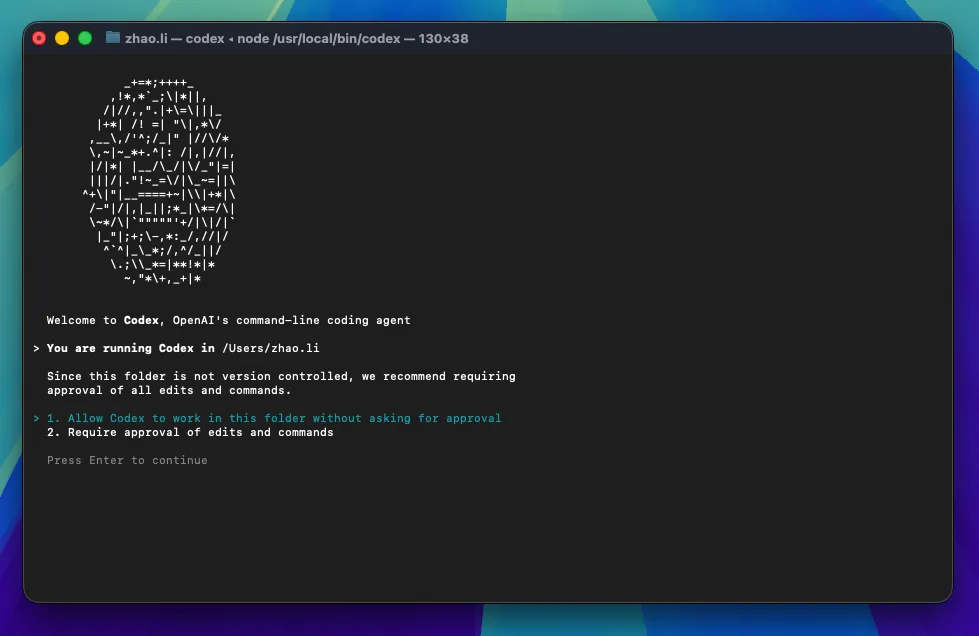
Set Codex CLI permissions: 1. Allow Codex to modify files directly; 2. Require manual approval before Codex modifies files
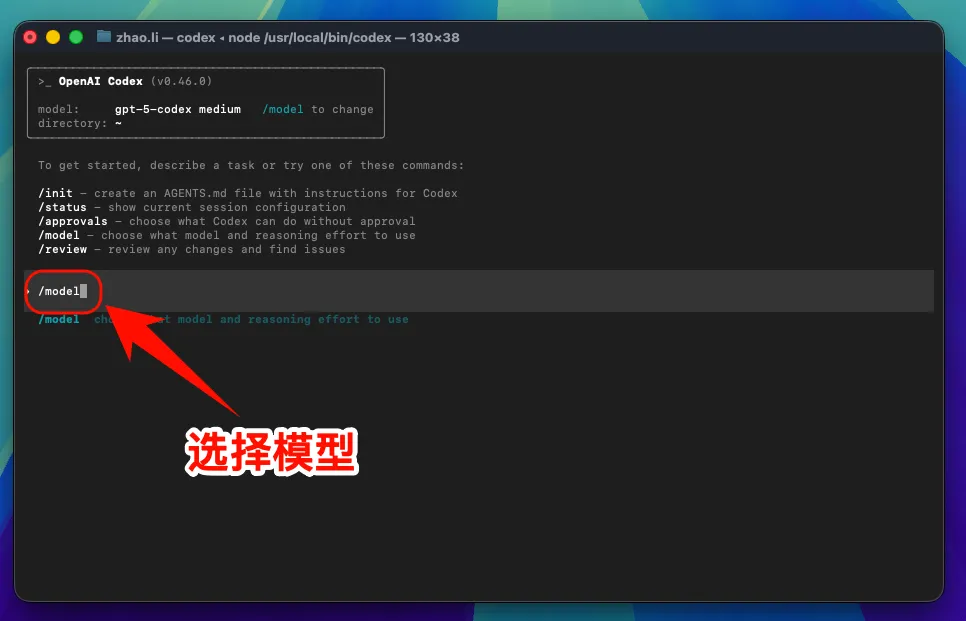
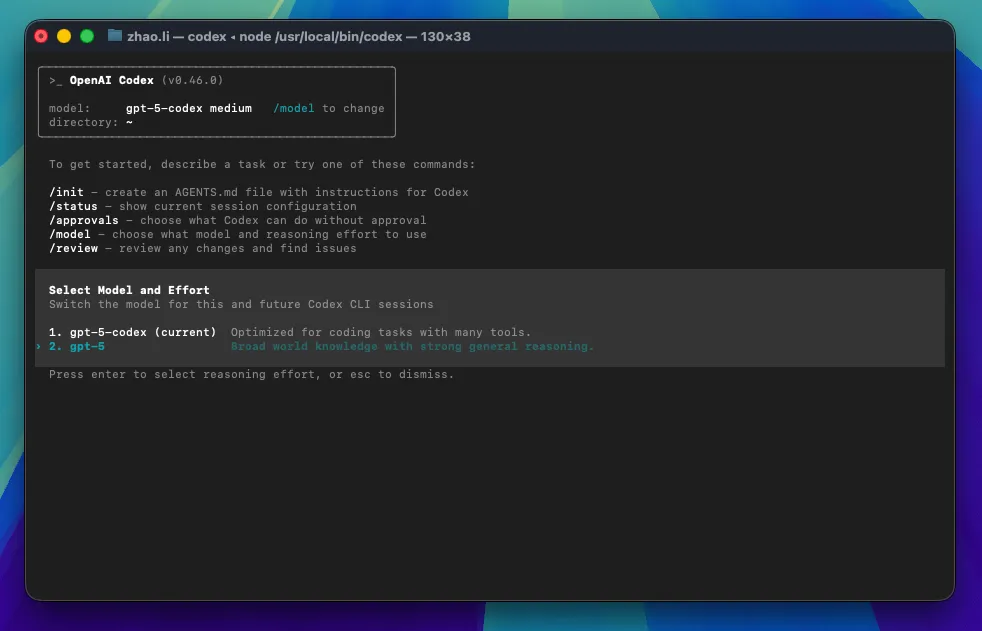
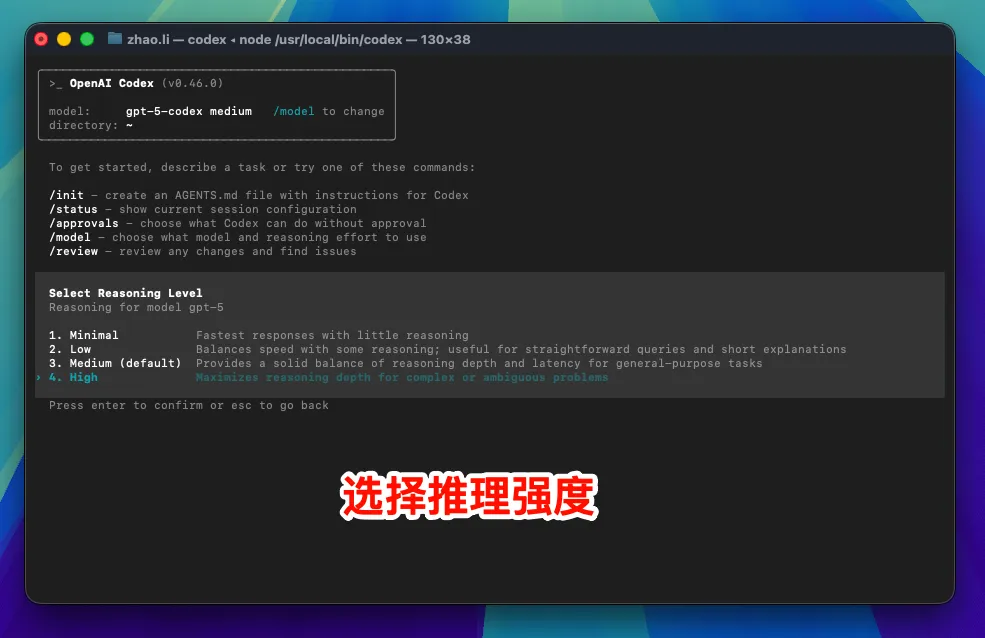
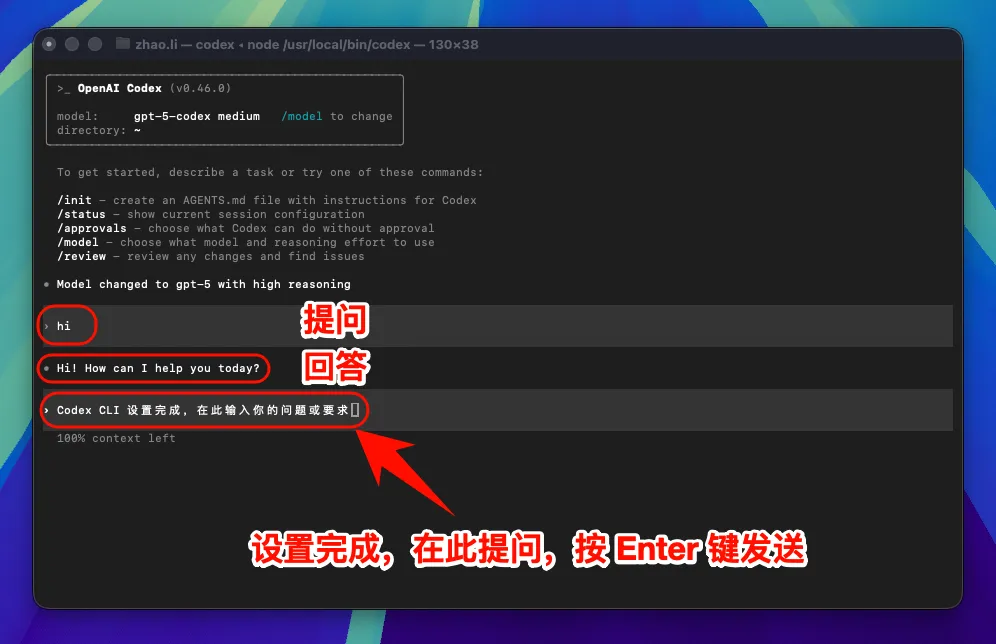
Note: After changing the endpoint address, all models used (including official preset models) will call the custom endpoint instead of using quota from your official account.
6. Common macOS issues
Permission error during installation
Try the following solutions:
- Install with
sudo:sudo npm install -g @openai/codex - Or configure
npmto use a user directory:npm config set prefix ~/.npm-global
macOS security settings block execution
If the system blocks Codex CLI from running:
- Open "System Preferences" → "Security & Privacy"
- Click "Open Anyway" or "Allow"
- Or run this in Terminal:
sudo spctl --master-disable
Illustrated Guide for Linux
1. Install the Node.js environment
Codex CLI requires a Node.js environment to run.
Node.js installation steps
Add the NodeSource repository:
sudo curl -fsSL https://deb.nodesource.com/setup_lts.x | sudo -E bash -Install Node.js:
sudo apt-get install -y nodejsLinux notes
- Some distributions may require additional dependencies
- Use sudo if you encounter permission issues
- Make sure your user has write permission to npm's global directory
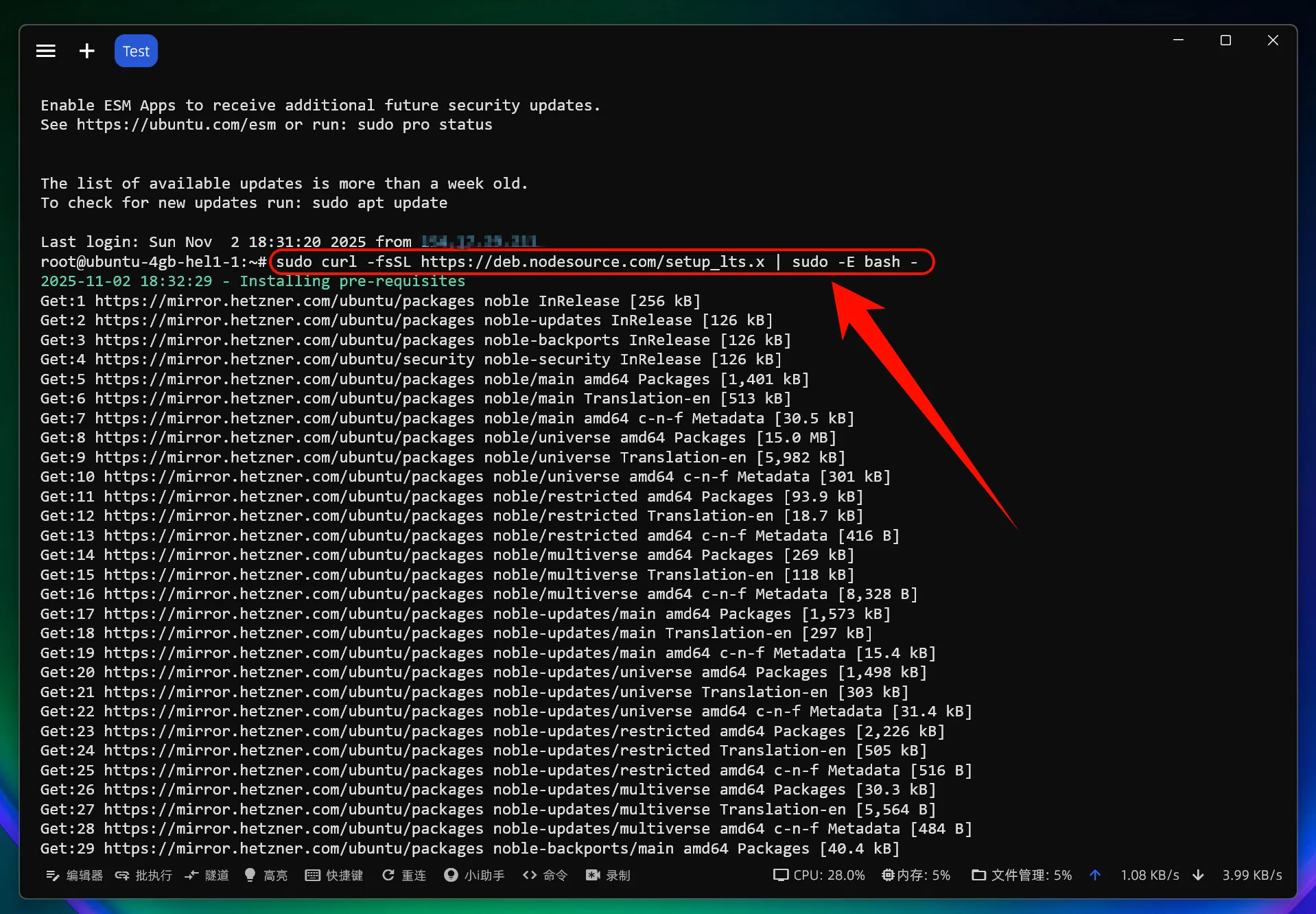
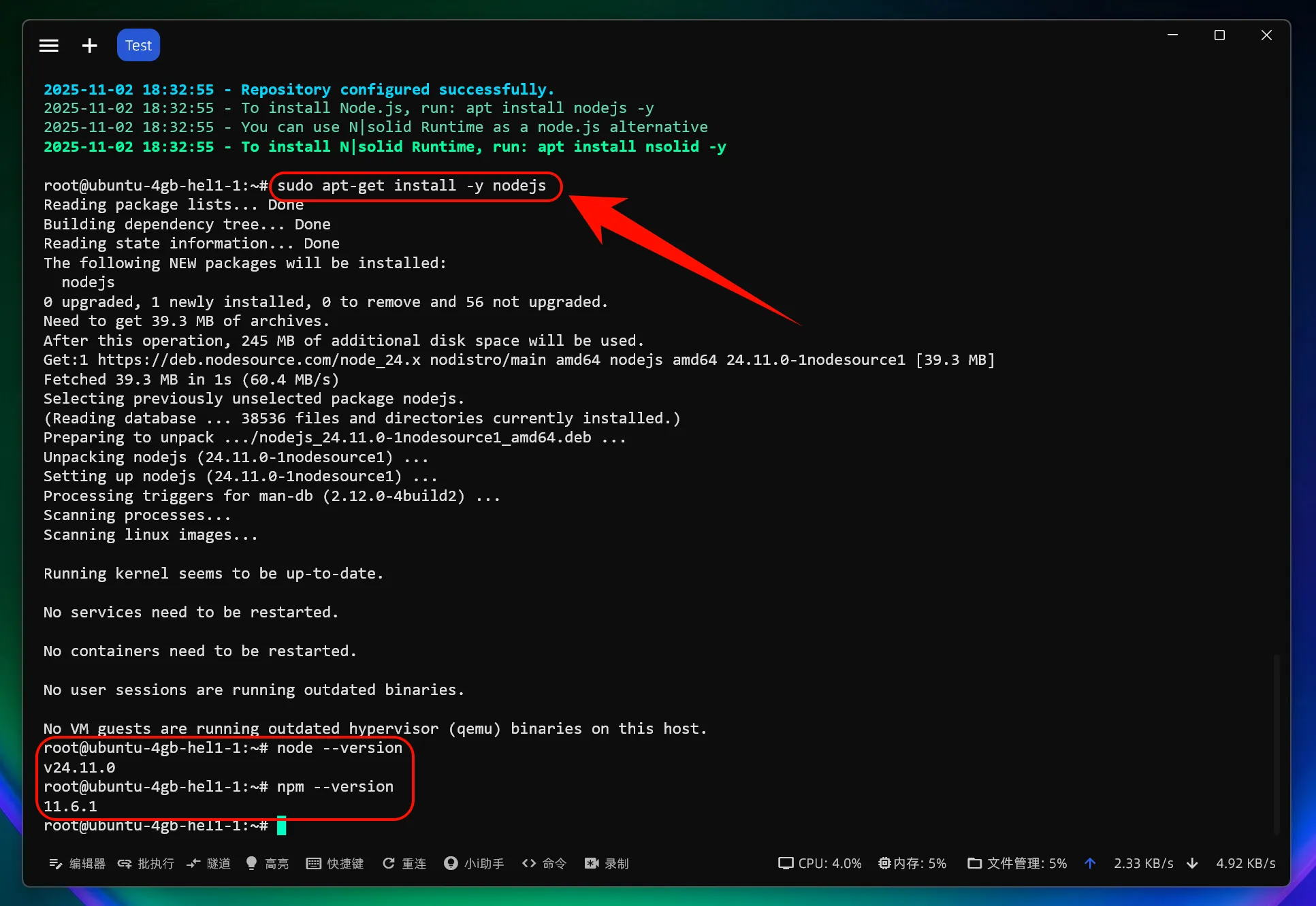
Verify that the installation succeeded
After installation, open Terminal and run the following commands:
node --version
npm --version
If version numbers are displayed, the installation was successful.
2. Install Codex CLI
Install Codex CLI
Open Terminal and run the following command:
# Install Codex CLI globally
npm install -g @openai/codex
If you encounter permission issues, you can use sudo:
sudo npm install -g @openai/codex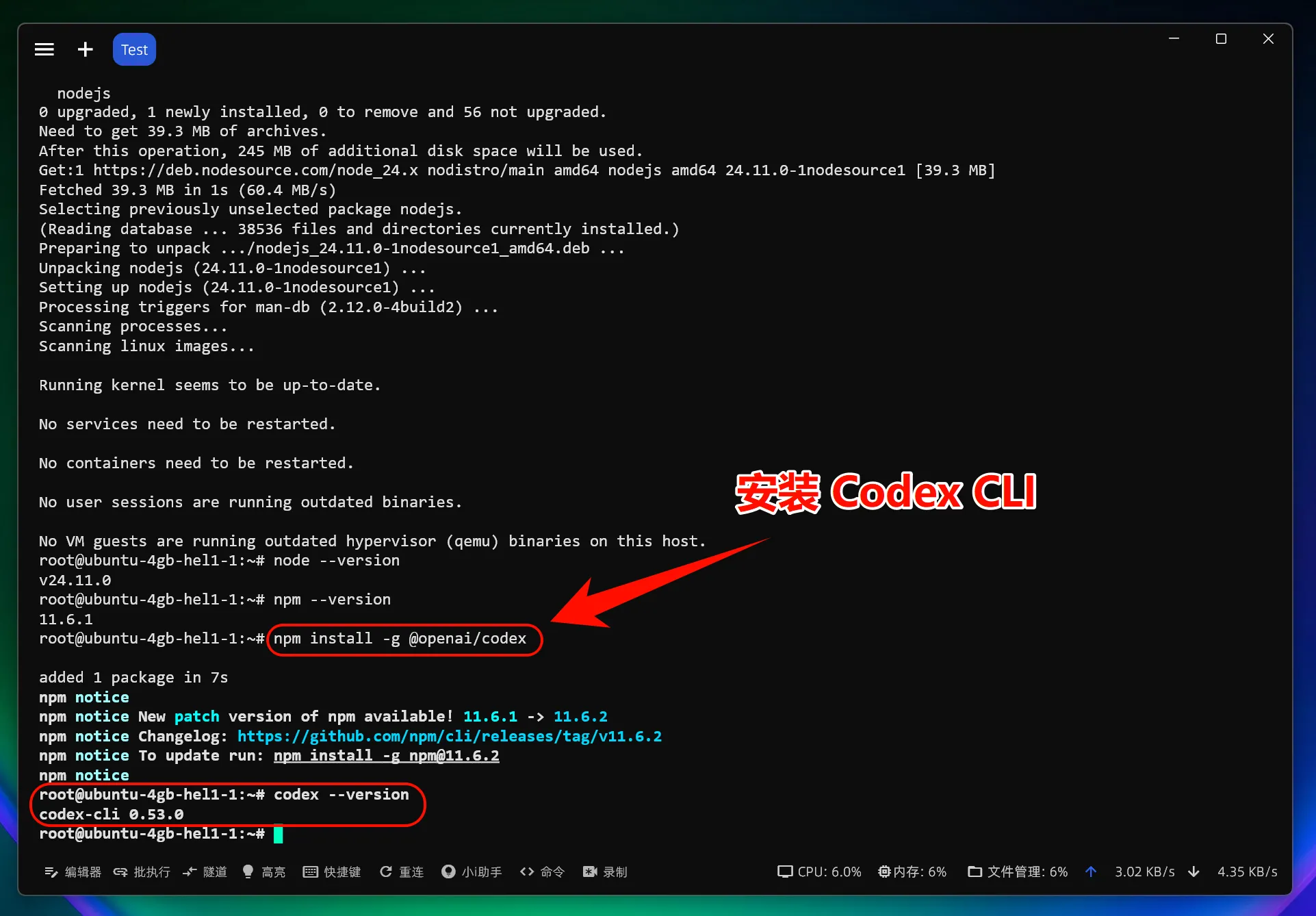
Verify the Codex CLI installation
After installation, run the following command to verify that it was installed successfully:
codex --versionIf a version number is displayed, congratulations! Codex CLI has been installed successfully.
3. Update the configuration file
One-click update for the Codex CLI configuration file
curl -fsSL https://raw.githubusercontent.com/QuantumNous/new-api-docs/refs/heads/main/helper/codex-cli-setup.sh | bash
4. Start using Codex CLI
You can now start using Codex CLI.
Launch Codex CLI
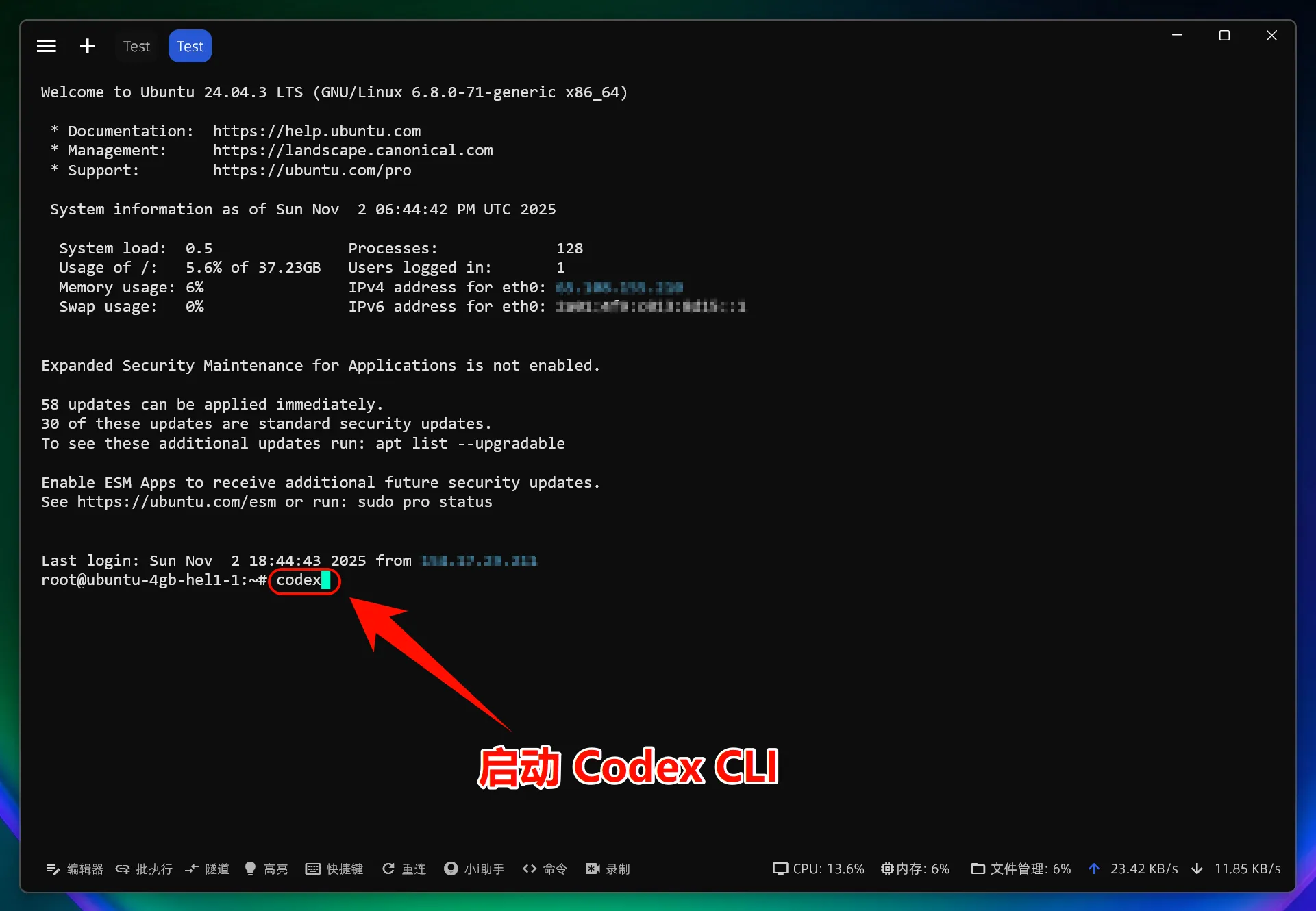
Launch Codex CLI directly:
codexUse it in a specific project:
# Go to your project directory
cd /path/to/your/project

# Launch Codex CLI
codex
Press Enter to launch Codex CLI.
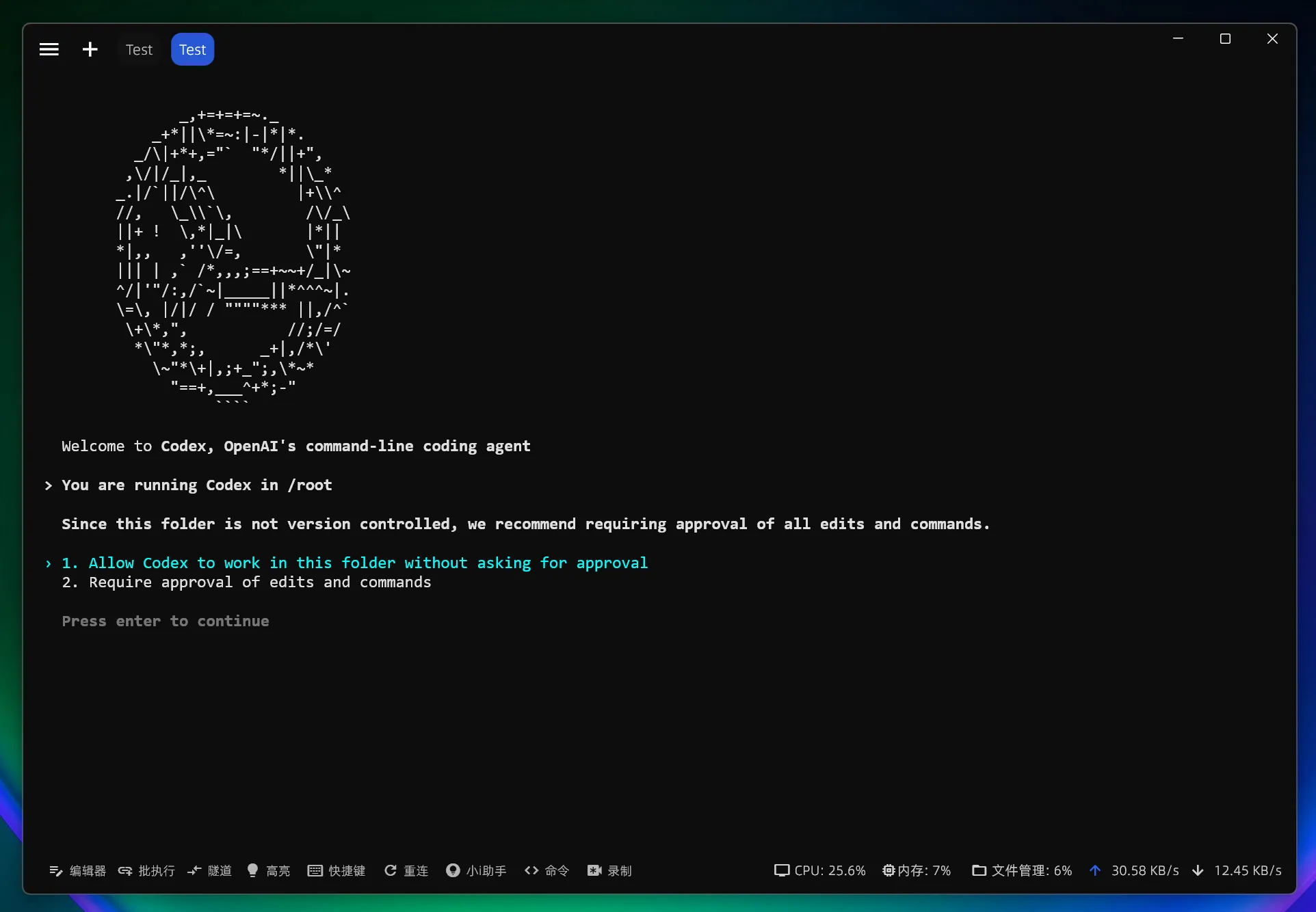
Set Codex CLI permissions: 1. Allow Codex to modify files directly; 2. Require manual approval before Codex modifies files
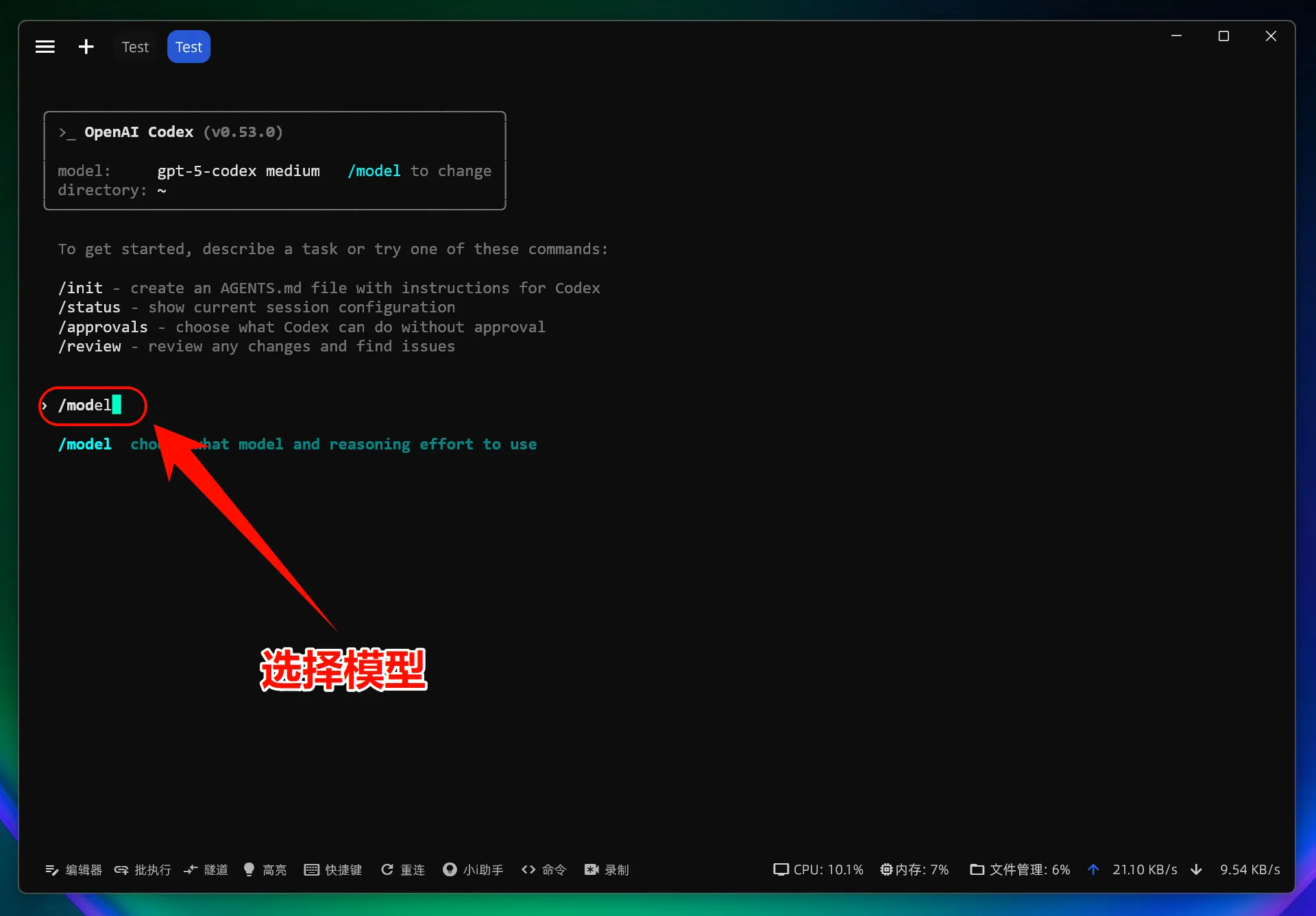
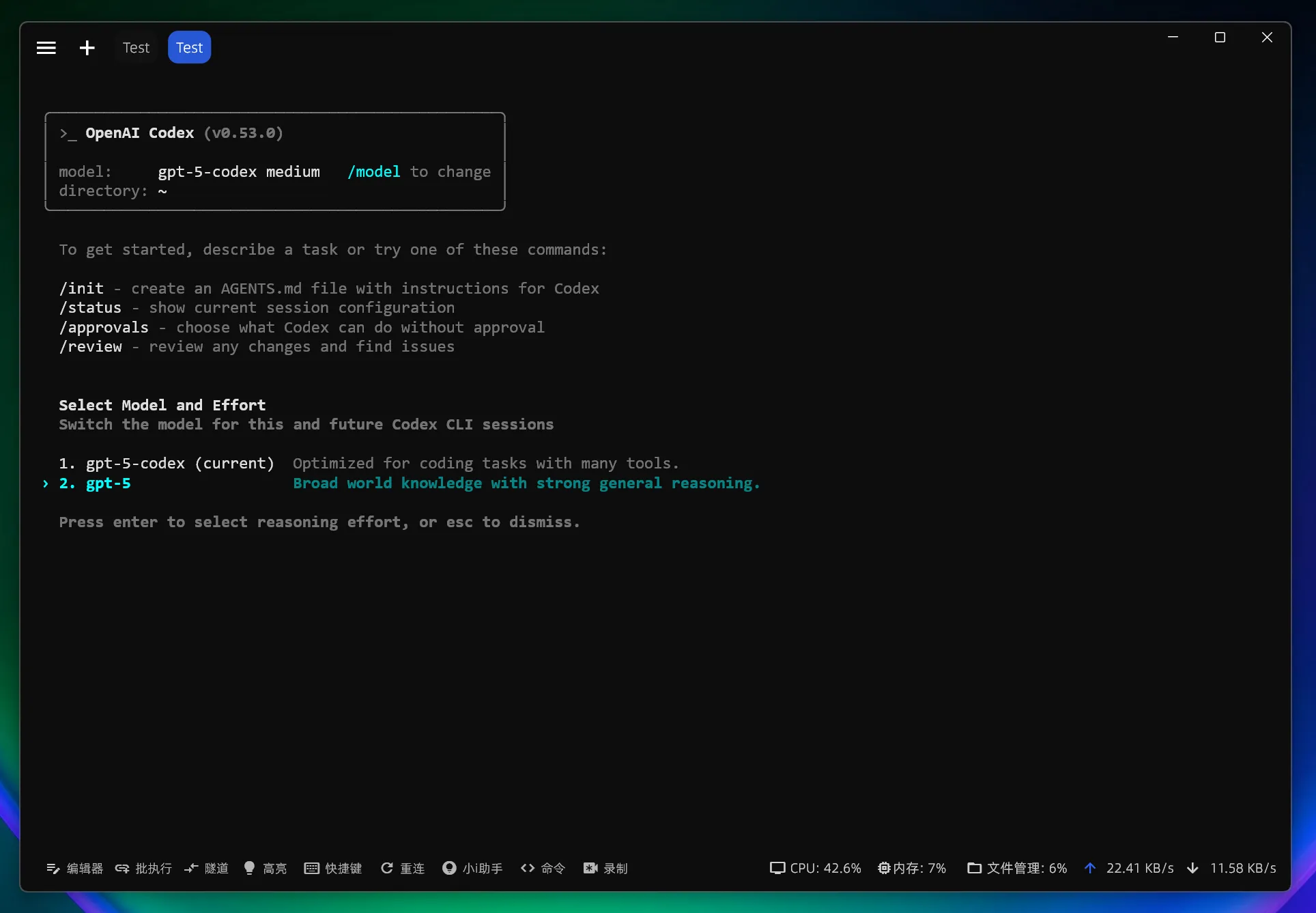
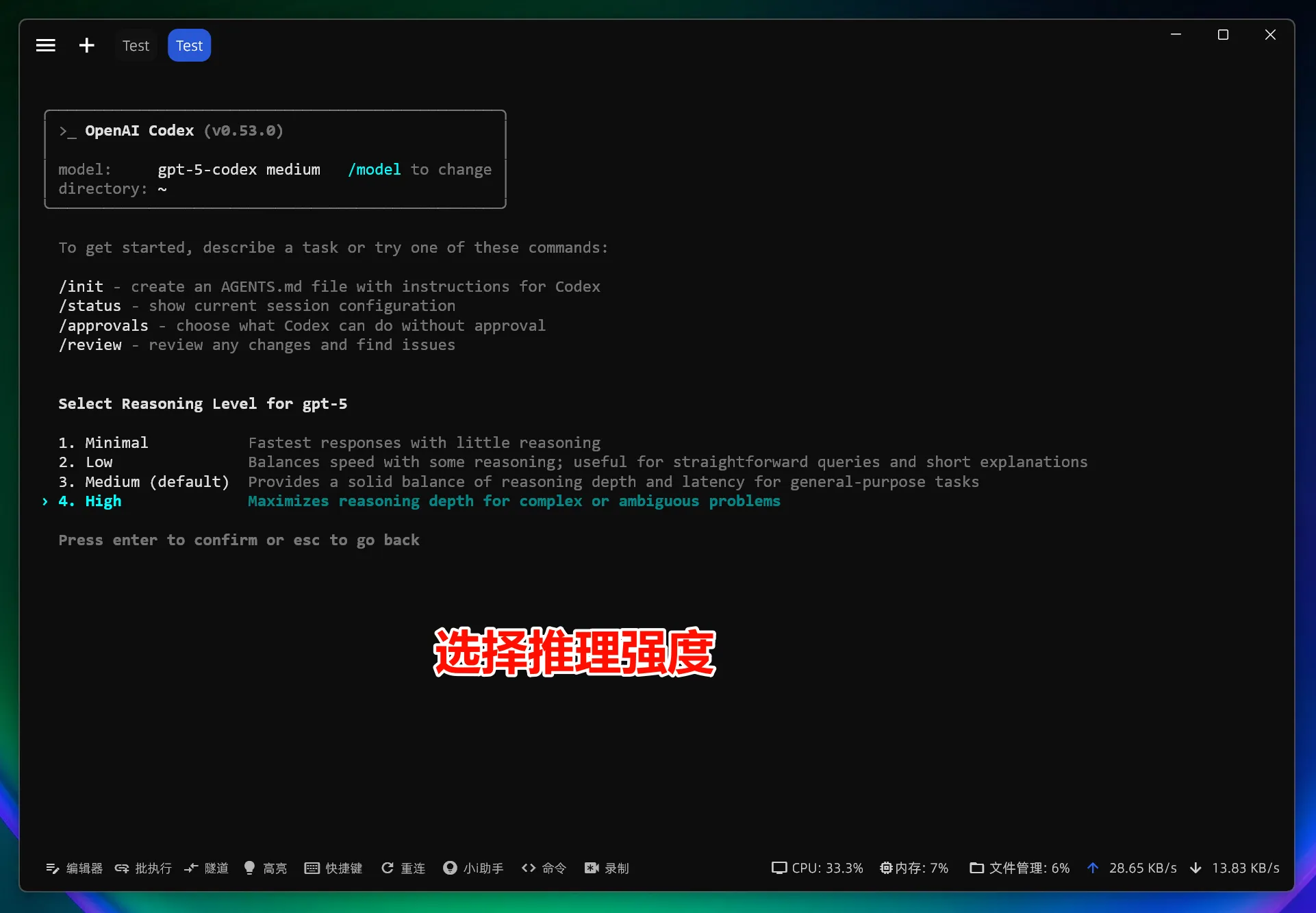
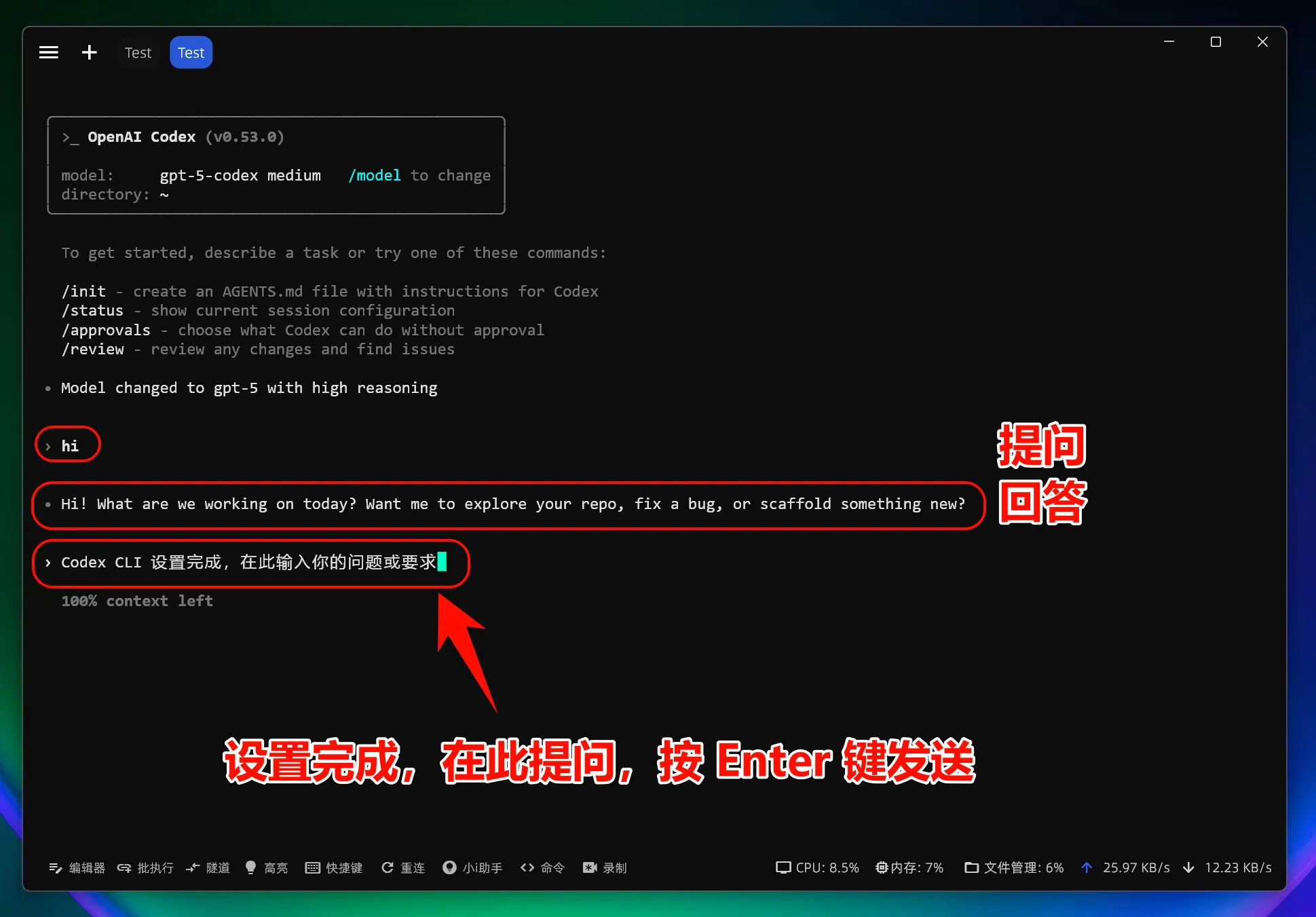
Note: After changing the endpoint address, all models used (including official preset models) will call the custom endpoint instead of using quota from your official account.
5. Common Linux issues
Permission error during installation
Try the following solutions:
- Install with
sudo:sudo npm install -g @openai/codex - Or configure
npmto use a user directory:npm config set prefix ~/.npm-global - Then add it to PATH:
export PATH=~/.npm-global/bin:$PATH
Missing dependency libraries
Some Linux distributions require additional dependencies:
# Ubuntu/Debian
sudo apt install build-essential

# CentOS/RHEL
sudo dnf groupinstall "Development Tools"
How is this guide?
Last updated on
Codex Extension in VS Code
Install the Codex extension in VS Code and configure Mole API as the model provider to chat with Codex directly in the editor.
Factory Droid CLI
Factory Droid CLI tutorial — install and configure an AI software engineering assistant and connect to New API. Automate the full development workflow from planning to testing.